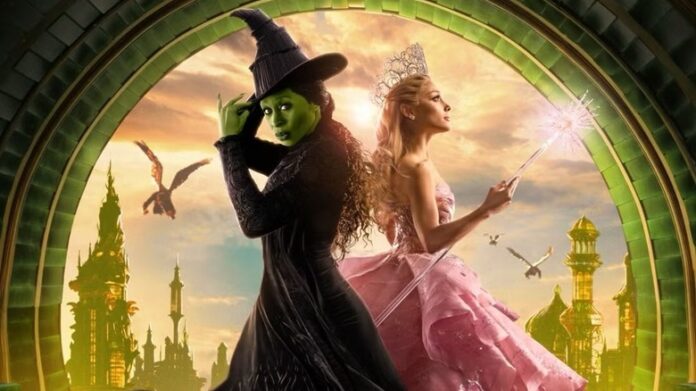
“Wicked” Movie Effect: How Wicked Is Dominating Broadway

“Wicked” Movie Effect: How Wicked Is Dominating Broadway

“Wicked” Movie Effect: How Wicked Is Dominating Broadway Again in 2026

The resurgence of Wicked Broadway 2026 is not simply the result of nostalgia or longevity. It is being actively reshaped by the gravitational pull of cinema, celebrity, and a new generation of audiences encountering the story for the first time. The stage production, long considered a permanent fixture of New York theater, has entered a different phase—one defined by renewed urgency and cultural relevance.

The film adaptation cycle has altered the tempo of attention. With anticipation surrounding the cinematic release, interest in the original production has intensified rather than plateaued. Search demand has accelerated, ticket availability has tightened, and conversations around the show have shifted from legacy status to immediacy. In this environment, Wicked Broadway 2026 reflects how a known property can become newly essential when reframed through contemporary media.

At the center of this shift is casting visibility. Ariana Grande, stepping into the role of Glinda on screen, has expanded the musical’s reach beyond traditional theater audiences. Her presence functions less as stunt casting and more as cultural translation—bridging Broadway with a global, digitally native audience that engages with performance differently.

Cinema as Catalyst, Not Replacement

Film adaptations have historically extended the life of stage productions, but the current cycle operates with greater intensity. Rather than drawing audiences away from live theater, the adaptation has redirected attention back to it. Viewers encountering the story through trailers, interviews, and soundtrack releases are seeking the immediacy of the stage version.

This dynamic reinforces a broader industry pattern, explored in Runway Magazine’s analysis of the Runway Magazine feature on the live performance resurgence, where audience behavior increasingly favors experience over access. The effect is cumulative. Each new piece of film-related content—whether a casting reveal or a visual teaser—feeds directly into ticket demand.

As a result, Wicked Broadway 2026 has become a case study in how cross-medium storytelling can amplify, rather than dilute, theatrical value.

The Power of Digital Discovery

A defining characteristic of this resurgence is the audience itself. Younger viewers, many of whom were not part of the original Broadway wave, are discovering the musical through fragmented digital moments—short-form video, soundtrack clips, and cast-driven content.

This mode of discovery changes the relationship between audience and production. The musical is no longer encountered as a singular, linear experience but as a series of entry points that build familiarity over time. By the moment a ticket is purchased, the narrative, songs, and characters already carry recognition.

This pattern aligns with broader cultural shifts examined in Runway Magazine’s coverage of Runway Magazine insights on youth-driven trend cycles, where visibility precedes participation. Within this framework, Wicked Broadway 2026 thrives because it exists simultaneously as content and experience.

Merchandising, Sound, and Cultural Echo

The expansion is not limited to ticket sales. Merchandising has seen a measurable increase, with visual motifs and character iconography circulating widely across digital platforms. At the same time, soundtrack streaming has surged, reintroducing songs to both returning audiences and first-time listeners.

Music plays a critical role here. Unlike traditional marketing cycles, where awareness peaks and fades, streaming allows the material to remain in continuous circulation. Each listen becomes a point of re-entry into the broader cultural conversation.

This sustained visibility echoes patterns identified in Runway Magazine’s analysis of Runway Magazine cross-industry influence, where sound, fashion, and performance intersect to extend relevance beyond their original formats.

Broadway’s Expanding Feedback Loop

What distinguishes this moment is the feedback loop between mediums. Film generates interest in theater; theater reinforces the cultural weight of the film. Neither operates independently. Instead, they create a cycle of reinforcement that sustains attention over longer periods.

This model is increasingly shaping how productions are developed and marketed. Broadway is no longer positioned as the origin point alone but as part of a larger ecosystem that includes film, streaming, and social media. Within that system, Wicked Broadway 2026 operates as both anchor and amplifier.

The implications extend beyond a single production. As explored in Runway Magazine’s broader examination of Runway Magazine entertainment convergence, this approach suggests a future where theatrical success is inseparable from its presence across multiple cultural channels.

Where the Spell Holds

The renewed dominance of Wicked is not accidental. It reflects a precise alignment of timing, casting, and media exposure. More importantly, it demonstrates how audiences now move between formats—watching, listening, sharing, and ultimately attending.

What lies ahead is not a temporary spike but a redefinition of how Broadway sustains relevance. Productions that understand this interplay will continue to expand their reach, while those that remain isolated risk fading from the conversation.

For now, Wicked Broadway 2026 stands as a clear signal: the boundary between stage and screen has dissolved, and in that space, theater has found a new kind of power.
Dries Van Noten Venice Exhibition Redefines Runway Culture

Dries Van Noten’s Venice Exhibition Redefines Runway Culture

Dries Van Noten’s Venice Exhibition Redefines Runway Culture Through Art and Protest

Dries Van Noten has never relied on spectacle to command attention. Instead, he builds meaning through layering—of references, of materials, of time. His latest project in Venice extends that philosophy beyond the runway entirely. With Dries Van Noten’s Venice Exhibition, he shifts the conversation from presentation to context, from seasonal output to cultural position.

The exhibition arrives at a moment when fashion increasingly questions its own format. Traditional runway shows still define the calendar, yet they no longer contain the full scope of what designers aim to express. As seen across recent coverage on global fashion week expansion, the industry continues to move beyond its established centers and structures. In that landscape, Dries Van Noten’s Venice Exhibition does not interrupt the system—it reframes it.

More importantly, the exhibition answers a question that has quietly shaped recent seasons: what happens when fashion no longer needs the runway to validate itself? Here, garments exist without the pressure of immediacy. They unfold within space, alongside art, history, and object. As a result, Dries Van Noten’s Venice Exhibition becomes less about display and more about interpretation.

A Space Where Fashion and Art Hold Equal Weight

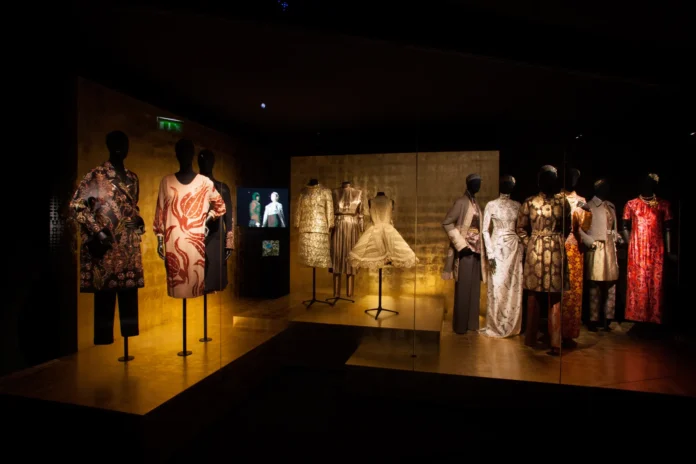
Set within a Venetian cultural institution, the exhibition brings together over 200 pieces—ranging from couture garments to archival references and contemporary artworks. However, the significance lies not in volume but in arrangement. Each element occupies space deliberately, allowing fashion to operate alongside art rather than beneath it.

Consequently, runway meets art not as a concept, but as a structural decision. Visitors do not move through a sequence of looks. Instead, they navigate a layered environment where clothing interacts with sculpture, painting, and installation.

This approach reflects a broader shift toward the immersive fashion experience, where meaning emerges through proximity and contrast. It also echoes earlier explorations of conceptual fashion show formats, though here the emphasis feels quieter, more resolved.

As a result, the exhibition resists the pace of the traditional runway. It asks the viewer to remain, to observe, and to reconsider.

Beauty as Protest, Without Declaration

At the core of Dries Van Noten’s Venice Exhibition lies a subtle but direct proposition: beauty itself can function as protest. Not through slogans or overt messaging, but through insistence—on craft, on detail, on presence.

In a moment shaped by political and cultural instability, this position carries weight. Rather than responding through commentary, Van Noten responds through construction. The garments assert their relevance by existing with precision and intention.

Moreover, this perspective aligns with the growing discourse around fashion as protest. However, it avoids the immediacy often associated with that phrase. Instead, it suggests that resistance can exist within refinement.

This approach resonates with the ongoing evolution of avant garde fashion 2026, where designers increasingly favor nuance over declaration. It also reflects a broader fashion culture shift toward work that sustains attention rather than demands it.

Because of this, the exhibition feels less like a reaction and more like a position held over time.

Dialogue Across Eras

Equally significant is the way the exhibition bridges historical and contemporary references. Archival garments appear alongside modern designs, while artifacts and artworks introduce additional layers of context.

This structure creates a dialogue rather than a timeline. Visitors do not move from past to present; they experience both simultaneously. As a result, the exhibition challenges the linear progression that typically defines fashion seasons.

This method reflects the logic behind couture art installation, where placement determines meaning. It also connects to ongoing discussions around contemporary couture trends, which increasingly draw from the archive without replicating it.

For Runway Magazine readers familiar with archive-driven luxury collections, the continuity feels clear. Designers no longer revisit the past for nostalgia alone—they use it to recalibrate the present.

In this context, history does not sit behind the work. It moves within it.

Beyond the Runway Format

Ultimately, Dries Van Noten’s Venice Exhibition signals a broader transformation in how fashion operates. The runway remains relevant, yet it no longer defines the limits of expression. Designers now explore formats that allow for depth, duration, and complexity.

This direction aligns with the future of runway shows, where presentation expands into environments, installations, and hybrid experiences. It also reflects the growing importance of designer exhibitions 2026 as platforms for sustained engagement.

At the same time, this shift connects to other categories within the industry. It intersects with evolving approaches to textile development, influences beauty narratives that prioritize longevity over immediacy, and parallels the refinement seen in tailoring across recent seasons.

As explored in current runway trend analysis, fashion increasingly values continuity over disruption. In that sense, Dries Van Noten’s Venice Exhibition does not break from the system—it extends it.

The Direction Forward

Looking ahead, the implications remain clear. Designers will continue to test formats that move beyond the runway, not as replacements, but as expansions. Exhibitions, installations, and cross-disciplinary collaborations will shape how collections are experienced and understood.

At the same time, audiences will adjust their expectations. They will look for depth rather than immediacy, for context rather than sequence. This shift will redefine how fashion communicates value.

In that landscape, Dries Van Noten’s Venice Exhibition stands as a reference point. It demonstrates that fashion can exist without urgency, without spectacle, and without compromise.

And because of that, it suggests a future where the most powerful statement is not the one that moves fastest—but the one that remains.

Broadway Box Office 2026 Boom- Record-Breaking Shows Signal

Broadway Box Office 2026 Boom- Record-Breaking Shows Signal

Broadway Box Office Boom 2026: Record-Breaking Shows Signal a New Golden Era

The momentum behind Broadway box office 2026 is not speculative—it is measurable, visible, and reshaping how live performance is valued. Weekly grosses are approaching levels once considered peak pre-pandemic benchmarks, while audience behavior has shifted in ways the industry did not anticipate even two years ago. What is unfolding is not simply a recovery. It is a recalibration of demand, pricing, and cultural relevance.

Tourism has returned to New York with clarity of purpose. Visitors are not passively adding theater to their itineraries; they are planning trips around it. This shift has tightened ticket availability for both long-running productions and new premieres, creating an ecosystem where scarcity and anticipation drive value. The result is a market in which Broadway box office 2026 reflects both economic recovery and a deeper cultural correction—one that favors presence over convenience.

Streaming fatigue has played a quiet but decisive role. Audiences, saturated by infinite content, are rediscovering the limits of passive consumption. Theater offers something else entirely: time-bound, unrepeatable experience. That distinction has become its strongest currency. Within this context, Broadway box office 2026 is less about numbers and more about a return to collective attention.

The Economics of Demand

The current surge in revenue is not driven by volume alone. Pricing strategies have evolved. Dynamic ticketing—once viewed with skepticism—has become a central mechanism in maximizing revenue across performances. Premium seating tiers now operate with the same logic as luxury fashion drops: proximity, exclusivity, and timing define cost.

This recalibration aligns theater more closely with broader luxury and entertainment markets, where value is increasingly fluid. High-demand shows command prices that reflect cultural heat, not just production scale. As a result, Broadway box office 2026 reveals a system that is both more responsive and more aggressive in capturing demand.

Long-running productions continue to anchor stability, but new works are contributing significantly to revenue growth. This balance between legacy and innovation is critical. Without it, the current expansion would risk becoming a short-term spike rather than a sustained shift.

A Cultural Return to Live Experience

The renewed interest in theater mirrors movements seen across fashion and live events, where physical presence has regained importance. Just as runway shows have reasserted their influence within the fashion calendar, theater has reclaimed its position as a primary cultural touchpoint.

This alignment is not coincidental. Both industries depend on immediacy, audience reaction, and shared experience. The rise in theater attendance reflects a broader rejection of distance—digital, emotional, and sensory. Within this framework, Broadway box office 2026 becomes part of a larger narrative: the return of experiential culture.

Celebrity involvement has also contributed to this shift. High-profile casting decisions and limited-run appearances have drawn new audiences while reinforcing theater’s relevance within contemporary entertainment. These moments function as cultural accelerants, expanding visibility beyond traditional theatergoers.

Tourism, Timing, and the Global Audience

International tourism has re-entered the equation with force. Visitors from Europe, Asia, and South America are once again treating Broadway as essential, not optional. This global audience brings not only volume but also a willingness to engage with premium pricing, further reinforcing revenue growth.

Seasonality has also changed. Historically predictable attendance cycles have flattened, replaced by more consistent demand throughout the year. This stability allows producers to plan with greater confidence and invest in more ambitious productions.

At the center of these shifts, Broadway box office 2026 stands as both indicator and catalyst. It reflects a market that has regained its footing while pushing into new territory.

Where the Momentum Leads

What defines this moment is not simply that Broadway has returned—it is how it has returned. More adaptive, more economically sophisticated, and more aligned with contemporary audience behavior, the industry is no longer operating within its previous constraints.

The question now is not whether this growth will continue, but how it will evolve. As pricing models refine, tourism stabilizes, and audiences continue to prioritize live experience, the trajectory suggests expansion rather than correction.

If this is a golden era, it is not built on nostalgia. It is built on transformation—one that positions theater not as a legacy form, but as a forward-moving force within global culture.

Earth Day Runways 2026- The Nature-Inspired Fashion Trend

Earth Day Runways 2026- The Nature-Inspired Fashion Trend

Earth Day Runways 2026: The Nature-Inspired Fashion Trend Dominating Global Catwalks

The shift appeared before anyone named it. Across Paris, Milan, and New York, designers began to soften the runway—textures replaced polish, light filtered instead of glaring, and garments carried a sense of origin rather than surface. Earth Day Runways 2026 emerges from that progression, not as a single statement but as a convergence already shaping the season.

More importantly, this moment answers a question that has been building across recent collections: how does luxury respond to environmental awareness without reducing itself to messaging? Designers now resolve that tension through material intelligence and spatial control. As seen in Spring/Summer 2026 runway trends, the runway no longer functions as a neutral stage. Instead, it actively shapes how the collection is understood.

Consequently, moss-lined floors, sculptural florals, and organic structures do more than set a scene. They redefine how fashion communicates value. Rather than relying on surface novelty, designers now build meaning through context. In that sense, Earth Day Runways 2026 signals a structural shift rather than a passing trend.

The Environment as Runway Language

At Dior and Chanel, the runway extends beyond the garment itself. Designers construct environments using forest floors, soil textures, and living installations, all executed with couture-level precision. As a result, these spaces do not decorate the collection—they frame it.

Moreover, this approach aligns with the broader direction of eco runway 2026, where staging carries equal weight to silhouette. It also recalls earlier explorations in Alexander McQueen’s environmental storytelling. However, today’s execution feels more controlled. Instead of spectacle, designers prioritize immersion.

As a result, the audience no longer observes from a distance. They move within a constructed environment that shapes perception in real time.

Material Intelligence and Botanical Construction

At the same time, botanical couture has evolved beyond literal interpretation. Designers no longer rely on surface florals alone. Instead, they embed natural references directly into fabrication, structure, and finish.

For example, organic textures fashion now appears through fiber innovation, irregular dye processes, and tactile layering. Consequently, garments feel developed rather than applied. This shift reinforces the growing influence of sustainable couture, where durability and adaptability define value.

As outlined in luxury sustainable fashion analysis, designers increasingly measure success through longevity. Therefore, materials must evolve with wear, not simply impress at presentation.

At this point, the garment no longer stands apart from its environment. Instead, both operate as a single system.

Heritage, Influence, and Continuity

Of course, nature has long shaped fashion. Martin Margiela and Alexander McQueen explored decay, growth, and transformation decades ago. However, the difference now lies in scale and adoption.

Today, major houses integrate these ideas into core collections rather than isolating them within conceptual work. As a result, the environmental fashion movement has moved from the margins into the center of luxury.

Additionally, this shift extends beyond clothing. It connects directly to developments in beauty, accessories, and material science. For instance, recent skincare innovation reflects the same focus on barrier function and long-term performance.

Because of this, fashion no longer operates in isolation. It responds to a broader cultural adjustment toward systems thinking.

The Balance Between Aesthetics and Accountability

At the same time, this direction introduces new pressure. As sustainable fashion trends 2026 gain visibility, audiences demand clarity and proof.

Designers recognize that expectation. Therefore, they shift away from overt messaging and toward visible construction choices. The runway sustainability trend now communicates through materials, sourcing, and execution—not slogans.

Consequently, credibility becomes part of the design itself. The audience no longer accepts intention alone; it expects alignment between concept and reality.

Where the Movement Extends

Looking ahead, Earth Day Runways 2026 points toward a broader redefinition of innovation. Designers no longer measure progress solely through silhouette or concept. Instead, they evaluate how environment, material, and construction work together.

At the same time, this direction intersects with other seasonal movements, including the refinement of tailoring and the rise of texture-led design. It also aligns with the growing influence of eco friendly fashion designers, who continue to reshape production standards.

Ultimately, Earth Day Runways 2026 does not introduce something entirely new. Rather, it clarifies what fashion has been moving toward—a system where design responds to context, not just aesthetics.

And because of that, Earth Day Runways 2026 will not remain a moment. It will continue as a method.

Shimmer Makeup Is Back- Revival Taking Over TikTok in 2026

Shimmer Makeup Is Back- Revival Taking Over TikTok in 2026

Shimmer Makeup Is Back: The Sparkle Revival Taking Over TikTok in 2026

The return of shimmer is not a reaction. It is a correction. After several seasons defined by restraint—skin-first finishes, muted tones, and the dominance of “clean girl” minimalism—the shimmer makeup trend 2026 reintroduces light as a deliberate surface. It does not overwhelm the face. It repositions it. Across TikTok and the Spring/Summer runways, shimmer appears with precision, signaling a shift toward expression that feels controlled rather than excessive.

This moment matters because it reframes how visibility functions in beauty. Where matte once suggested discipline, shimmer now suggests awareness. The face becomes reflective—not only in finish, but in intent. As seen across recent runway beauty coverage on Runway Magazine, where minimalism began to soften into texture-driven looks, this transition was already underway. What TikTok accelerates, the runway had quietly introduced.

A Return to Light, Not Excess

The shimmer makeup trend 2026 draws from familiar references—1970s disco, 1990s high-glam editorial, and early 2000s frosted finishes—but it does not replicate them. Instead, it edits them. Glitter makeup TikTok content reveals a consistent pattern: less density, more placement. Sparkle no longer sits across the entire lid or cheek. It is concentrated, intentional, and often barely perceptible until it catches light.

This refinement aligns with broader shifts in runway beauty, where texture has replaced saturation. Much like the evolution seen in contemporary complexion trends, shimmer now works in layers. A wash of reflective pigment on the eyelid, a controlled highlight along the cheekbone, or a glossed lip with micro-shimmer particles—each element contributes without competing.

TikTok as Accelerator, Not Origin

While TikTok drives visibility, it does not create the trend in isolation. Instead, it amplifies what makeup artists and designers have already begun to explore. Viral TikTok makeup trends demonstrate how quickly aesthetic shifts can move from niche to mainstream, particularly when they offer adaptability.

Creators favor shimmer because it translates across contexts. It can remain subtle for day or build into a more expressive evening look. This flexibility mirrors the broader movement toward modular beauty routines, where products and techniques adjust rather than dictate.

At the same time, TikTok reframes accessibility. High shine makeup looks no longer depend on professional tools or backstage expertise. They are broken down, simplified, and redistributed through short-form content, allowing the shimmer makeup trend 2026 to expand beyond traditional fashion audiences.

Cultural Influence and the Euphoria Effect

No discussion of shimmer’s return exists without acknowledging the influence of Euphoria. The series did not introduce sparkle to beauty, but it recontextualized it. Makeup became narrative—emotional, expressive, and intentionally visible. The Euphoria makeup trend continues to inform how shimmer is applied today: not as decoration, but as communication.

This influence extends beyond television. It intersects with a broader cultural appetite for individuality. As seen in the continued rise of expressive beauty trends, the face is no longer expected to conform to a single ideal. Instead, it shifts depending on mood, environment, and intention.

Placement Over Product

What defines the shimmer makeup trend 2026 is not the product itself, but how it is used. Makeup artists emphasize placement over intensity. Glitter eyeshadow trend applications are now diffused, often pressed into the center of the lid or layered beneath translucent pigments to create depth without weight.

Similarly, sparkly skin makeup avoids traditional highlighter stripes. Instead, it integrates into the complexion, creating a dewy shimmer skin effect that feels continuous rather than applied. Lips follow the same logic. Gloss replaces pigment, while shimmer remains suspended within it—visible only as the light shifts.

This approach reflects a broader alignment with modern sparkle makeup, where technique replaces excess. The goal is not to be seen immediately. It is to be noticed over time.

The End of Restraint as Default

The return of shimmer does not eliminate minimalism. It complicates it. Beauty no longer moves in a single direction. Instead, it operates across a spectrum where restraint and expression coexist. The glow makeup trend sits alongside matte finishes, just as bold makeup comeback moments exist beside barely-there looks.

What changes is the hierarchy. Minimalism is no longer the assumed standard. It becomes one option among many. Shimmer, in this context, represents permission—to add, to reflect, to shift.

Where It Moves Next

The shimmer makeup trend 2026 will continue to evolve through subtlety. Expect further refinement in texture—finer pigments, more translucent formulas, and finishes that blur the line between skincare and makeup. At the same time, festival makeup 2026 and runway presentations will likely push shimmer toward more immersive applications, exploring how light interacts with movement.

Equally important, the trend will integrate more deeply into everyday routines. What begins as a statement becomes standard through adaptation. As with previous cycles, the most enduring elements will be those that adjust easily.

Shimmer has returned, but it does not demand attention. It earns it.

Dimensional Cocoa Brunette Hair Color Is Dominating Spring 2026

Dimensional Cocoa Brunette Hair Color Is Dominating Spring 2026

Dimensional Cocoa Brunette Hair Color Is Dominating Spring 2026

There is a clear shift underway in seasonal color direction, and dimensional cocoa brunette sits at the center of it. After years of cooler brunettes and flatter chocolate tones, Spring 2026 is favoring warmth, movement, and reflective depth. That is why the shade has moved beyond salon trend reporting into broader beauty conversation. It answers a growing demand for color that looks polished, but not overworked.

Defined by a medium-to-deep brunette base threaded with subtle ribbons of mocha, caramel, chestnut, and toffee, dimensional cocoa brunette creates movement through nuance rather than contrast. The effect becomes especially visible in natural light, where tonal shifts appear fluid rather than engineered. This approach aligns with the broader return to expensive-looking color explored in Runway Magazine’s coverage of luxury hair direction.

The rise of dimensional cocoa brunette also reflects a larger seasonal recalibration. Beauty is moving toward tones that enhance natural base color rather than disguise it. That same philosophy appears in fashion’s embrace of softer neutrals and sun-washed palettes, as noted in Runway’s analysis of quiet luxury color stories. In both cases, refinement comes through control.

Warm Depth Replaces Flat Brown

The distinction between this shade and traditional brunette lies in dimension. Flat brown absorbs light. Dimensional cocoa brunette responds to it. Through layered undertones and gloss finishes, the color carries a luminous depth that feels healthier and more modern.

This is where related variations such as mocha mousse brunette and candlelit brunette enter the conversation. Each explores warmth differently, but all support the same movement away from rigid, monochromatic color. Meanwhile, the rise of rich chocolate brown hair trends reinforces how strongly brunettes have reclaimed attention this season.

Moreover, the tone works across skin tones because it adjusts through warmth rather than brightness. Colorists often cite nuanced chocolate finishes as the reason the shade feels adaptable rather than prescriptive.

Gloss as Luxury

Technique matters as much as tone. Most interpretations begin with custom all-over color, then build dimension through lowlights or chocolate brunette balayage. A gloss treatment often completes the process, adding the reflective surface that defines the finish.

That emphasis on shine has helped dimensional cocoa brunette gain traction. It offers visible richness without the maintenance demands often associated with high-impact color. Consequently, it has become a preferred option for clients looking for low maintenance brunette 2026 solutions that still feel elevated.

This practical luxury also connects to the broader shift toward beauty choices that grow out gracefully. As Runway Magazine observed in its reporting on lived-in color evolution, longevity increasingly shapes what feels modern.

Sunlit Dimension and Seasonal Movement

Part of the appeal lies in how the shade responds outdoors. In sunlight, undertones emerge gradually, which is why references to sunlit cocoa brunette and multi tonal brown hair continue to gain traction. The effect feels natural, but distinctly intentional.

That quality aligns with spring 2026 brunette trends, where warmth is treated not as a dramatic statement, but as a controlled layer within the color. It also intersects with adjacent beauty movements, including softer makeup palettes and neutral tailoring, reinforcing a consistent seasonal mood.

Even comparisons such as cocoa brunette vs flat brown reveal how the conversation has evolved. The debate is no longer brunette versus blonde, but dimensional versus static.

Where the Shade Moves Next

What gives this color staying power is flexibility. It can deepen toward espresso, soften through toffee, or move warmer through mocha brown hair color variations without losing its identity. That adaptability suggests the trend may extend well beyond spring.

As color direction continues to prioritize natural luminosity, dimensional cocoa brunette appears less like a passing seasonal idea and more like a broader refinement of brunette itself. Future iterations may move richer or glossier—perhaps toward glossy espresso brunette—but the core principle remains the same: dimension over density.

The most enduring beauty shifts rarely arrive loudly. They become standards because they make older approaches feel incomplete. This one is already moving in that direction.

Summer 2026 Movie Hype Is Rising as Spider-Man and Star Wars Ignite

Summer 2026 Movie Hype Is Rising as Spider-Man and Star Wars Ignite

Summer 2026 Movie Hype Is Rising as Spider-Man and Star Wars Ignite Early Search Demand

There are moments when audience anticipation begins shaping a film season before the films themselves arrive. This is one of them. Interest around summer movies 2026 has accelerated unusually early, driven by franchise scale, theatrical optimism, and a growing sense that the next box office cycle may be stronger than expected. That is why the story matters now. It is no longer only about release calendars. It is about whether demand is returning at blockbuster levels.

At the center of that momentum sit Spider Man Brand New Day and Mandalorian and Grogu movie, two titles already expanding beyond fan anticipation into broader entertainment conversation. Together, they have become focal points for how summer movies 2026 may define a wider theatrical rebound. As reflected in Runway Magazine’s coverage of entertainment and cultural momentum, major releases increasingly function as signals for industry confidence as much as audience demand.

Search activity around summer movies 2026 also suggests something larger. Interest is clustering not only around trailers and release dates, but around summer box office predictions and whether 2026 could become a defining year for theatrical recovery.

Franchise Scale and the Return of Event Cinema

The strongest current driver is scale. Spider Man Brand New Day carries the weight of both franchise expectation and audience familiarity, while The Mandalorian and Grogu represents the broader Star Wars theatrical return many viewers have anticipated.

That combination has strengthened attention around upcoming Marvel movies and the larger cycle of blockbuster films 2026. It also reflects a return of event-driven moviegoing, where anticipation begins shaping cultural visibility months ahead of release.

Moreover, this momentum intersects with broader conversations around most anticipated movies 2026, where franchise titles continue driving early search behavior at a scale independent films rarely match.

A Wider Summer Slate Is Benefiting

Importantly, the excitement is not isolated. Anticipation around these two films has increased attention across movie releases coming soon, lifting visibility for adjacent releases such as Toy Story 5 news and The Devil Wears Prada 2 movie.

That spillover matters. Historically, strong tentpole demand often strengthens interest in the broader release calendar. This is one reason summer movies 2026 increasingly appears in discussions of a possible 2026 box office rebound.

Runway Magazine’s reporting on broader industry shifts has often noted that confidence tends to move through clusters, not isolated titles. This summer slate may be illustrating exactly that.

Search Demand Is Becoming a Signal

Another notable shift lies in how early search interest itself is being interpreted. Queries around Spider Man 2026 release, new movie trailers today, and new Hollywood movies trending suggest audiences are engaging before marketing cycles fully mature.

That matters because early attention increasingly shapes industry narratives. It can influence perception of viability long before opening weekend. In that sense, summer movies 2026 has already become part of a larger performance story.

The involvement of Tom Holland further amplifies that dynamic, particularly as Tom Holland Spider Man remains one of the strongest celebrity-franchise search intersections in entertainment.

The Question of a Box Office Rebound

The larger question, however, is whether anticipation translates into measurable recovery. That is where conversations around best upcoming movies and upcoming theatrical releases begin to intersect with industry economics.

If the strongest titles perform at projected levels, 2026 may reinforce a broader return of theatrical confidence. If they exceed them, the year may begin to reshape assumptions about post-fragmentation audience behavior.

That possibility is why summer movies 2026 now feels bigger than seasonal hype. It sits within a wider debate over what theatrical relevance looks like going forward.

Where the Momentum Leads

What makes this moment notable is not simply that audiences are excited. It is that the excitement is structured around expectation of scale. That distinction matters.

Through Spider Man Brand New Day, Mandalorian and Grogu movie, and the surrounding slate, summer movies 2026 is becoming an early test of whether event cinema can again anchor the industry at full strength.

The strongest shifts often begin before they are measurable. Sometimes they begin in anticipation.

This may be one of those moments.

Celebrities Reshaping Runway Visibility – Met Gala 2026 Theme

Celebrities Reshaping Runway Visibility - Met Gala 2026 Theme

Celebrity Moments Are Reshaping Runway Visibility Ahead of the 2026 Met Gala

The conversation around Met Gala 2026 theme extends well beyond a single red carpet. It is already reshaping how fashion is seen, circulated, and amplified. With “Fashion Is Art” positioning clothing as cultural expression rather than event dressing, the moment has widened runway visibility in ways that feel structural, not episodic. That is why this matters now. The relationship between fashion and celebrity is no longer promotional adjacency. It has become part of how fashion builds relevance.

Across recent seasons, Met Gala 2026 theme discussions have intensified attention around the idea of fashion as performance. That shift has appeared not only in museum framing and editorial discourse, but across runway events themselves. As noted in Runway Magazine’s reporting on evolving cultural runway narratives, fashion increasingly operates through moments that travel instantly beyond the venue.

This helps explain why Met Gala 2026 theme has become a wider lens through which celebrity presence is being reinterpreted. A front-row arrival, a surprise appearance, or a viral runway cameo now carries significance beyond publicity. It can alter the visibility of a collection in real time.

Celebrity Presence as Cultural Force

High-profile figures continue to drive that acceleration. Beyoncé, Nicole Kidman, and Venus Williams represent more than celebrity attendance; they extend fashion’s cultural reach.

That influence has become especially visible through celebrity runway appearances, where the appearance itself can generate as much attention as the collection. In Milan, surprise moments involving Milan Fashion Week celebrities have reinforced how quickly engagement can shift when entertainment intersects with the runway.

Moreover, this dynamic aligns with Runway Magazine’s earlier analysis of celebrity impact on fashion narratives, where visibility increasingly depends on who enters the conversation, not just what appears on the runway.

The Runway and the Red Carpet Converge

The old distinction between runway and red carpet continues to erode. The red carpet runway connection now operates in both directions. Designers use celebrity appearances to extend collection narratives, while celebrities use fashion events to shape their own cultural positioning.

That reciprocity has intensified ahead of Met Gala 2026 theme, particularly as the “Fashion Is Art” framing elevates clothing as symbolic expression. It also supports the rise of the fashion as art movement, where garments function less as seasonal objects and more as cultural statements.

At the same time, Paris Fashion Week stars have contributed to this convergence through appearances that blur the line between guest, muse, and participant. Consequently, runway shows increasingly function as live cultural performance.

Viral Moments and Visibility

One of the clearest indicators of this shift lies in runway show viral moments. A single appearance can redirect global attention within hours. That speed changes how fashion visibility is measured.

As a result, runway celebrity impact now carries implications beyond media impressions. It affects how collections circulate, how designers gain relevance, and how the broader fashion industry visibility conversation evolves.

This is also where fashion media coverage 2026 has changed. Coverage no longer centers exclusively on garments. It increasingly interprets who was present, why it mattered, and how that presence reshaped the event.

Runway’s broader reporting on the global fashion calendar 2026 has pointed to this larger realignment, where visibility comes through layered cultural participation rather than singular runway authority.

Fashion as Performance, Fashion as Art

What distinguishes this moment is not celebrity involvement alone, but the framework around it. Through Met Gala 2026 theme, fashion is positioned more explicitly as artistic and performative expression. That framing gives greater coherence to the entertainment-fashion relationship.

It also helps explain why fashion and celebrity culture now feels less transactional. There is a stronger sense of mutual authorship. Celebrities do not merely amplify collections; increasingly, they become part of how those collections are interpreted.

That evolution strengthens the entertainment and fashion crossover, but it also changes what fashion events are expected to do. They no longer simply present ideas. They stage them.

Where the Momentum Leads

As the Met Gala approaches, the larger implication is becoming clearer. Met Gala 2026 theme is not only shaping one event. It is reinforcing a broader shift in how fashion claims cultural space.

The strongest signal may be that runway visibility now depends as much on symbolic moments as on garments themselves. That does not diminish design. It changes the arena in which design gains meaning.

And increasingly, that arena looks less like a runway alone—and more like performance.


The Mummy 2026 Reboot Is Fueling Horror Search Traffic

The Mummy 2026 Reboot Is Fueling Horror Search Traffic

The Mummy Reboot Is Fueling Horror Search Traffic as Legacy Franchises Return

There is a reason The Mummy 2026 has moved beyond standard release coverage into wider cultural conversation. It arrives at a moment when audiences are reconsidering what legacy franchises can become, particularly in horror. That explains why the film matters now. It is not simply another revival. It has entered a larger debate about whether established intellectual property can generate new relevance rather than rely on recognition alone.

Directed by Lee Cronin, The Mummy 2026 has emerged as one of the most discussed new releases of the week, fueled by strong search traffic, polarized reactions, and curiosity around its reinvention of a familiar property. As reflected in Runway Magazine’s coverage of entertainment and cultural crossover, legacy franchises increasingly function as broader cultural signals, not just studio assets.

Part of that interest comes from timing. Horror has regained momentum as one of the most adaptive genres in contemporary cinema, and The Mummy 2026 enters within that wave. At the same time, its release intersects with growing attention around legacy horror franchises, where familiar titles are being reframed through darker, auteur-driven interpretations.

Reinvention Through Horror

The strongest discussion around the film centers on reinvention. Rather than leaning primarily on adventure spectacle, The Mummy 2026 positions dread, atmosphere, and practical effects closer to the foreground. That tonal shift has fueled interest around the horror reboot trend, particularly among audiences responding to a more severe interpretation.

This is where comparisons to other monster movies 2026 become relevant. The conversation is not only whether this reboot succeeds on its own terms, but whether it strengthens a broader cycle of studio horror reimaginings. That question has contributed to interest in the Universal horror reboot model as legacy properties continue evolving.

Moreover, social attention around practical effects and creature design has helped sustain visibility beyond opening reactions. In a crowded release landscape, visual identity still matters.

Legacy IP and Box Office Curiosity

Part of the story also lies in performance. Search activity around The Mummy box office and The Mummy opening weekend suggests the release has become a barometer for how much commercial momentum legacy revivals can still command.

That is especially significant as April 2026 movie releases compete for attention across genres. While mixed reactions have fueled discussion around The Mummy reboot review, that division may also be driving visibility rather than limiting it.

Runway Magazine’s broader reporting on shifting theatrical patterns has often pointed to this paradox: controversy can amplify relevance. In this case, the debate itself strengthens the film’s cultural footprint.

The Return of the Dark Universe Question

Inevitably, the release has revived discussion around the dark universe reboot. What once appeared closed as a studio strategy has returned as a speculative possibility, even if only through audience imagination.

That speculation intersects with search interest in The Mummy cast 2026, The Mummy trailer 2026, and even The Mummy ending explained, signaling that the conversation extends well beyond first-viewing reaction. Audiences are engaging with the film as part of a possible larger mythology.

Meanwhile, its position within new horror movies 2026 has strengthened broader interest in genre filmmaking as a theatrical driver. Horror remains uniquely capable of turning mid-budget films into event releases when concept and timing align.

A Broader Horror Cycle Is Taking Shape

What gives the film wider significance is not only the franchise itself, but what it may represent. The Mummy 2026 enters a market increasingly receptive to darker reworkings of familiar material, from creature mythology to psychological horror.

That has helped place it within conversations around trending horror movies today and best horror films in theaters, where audiences are actively comparing it to the genre’s strongest recent releases. It also suggests the return of legacy IP is not simply nostalgic recycling, but part of a broader industrial pattern.

As that cycle develops, the stronger question may not be whether this reboot restores a franchise, but whether it helps redefine how legacy horror functions.

That is where the story extends.

Spring 2026 Runway Shows Reveal a Great Reset in Fashion

Spring 2026 Runway Shows Reveal a Great Reset in Fashion

Spring/Summer 2026 Runway Shows Reveal a Great Reset in Fashion Direction

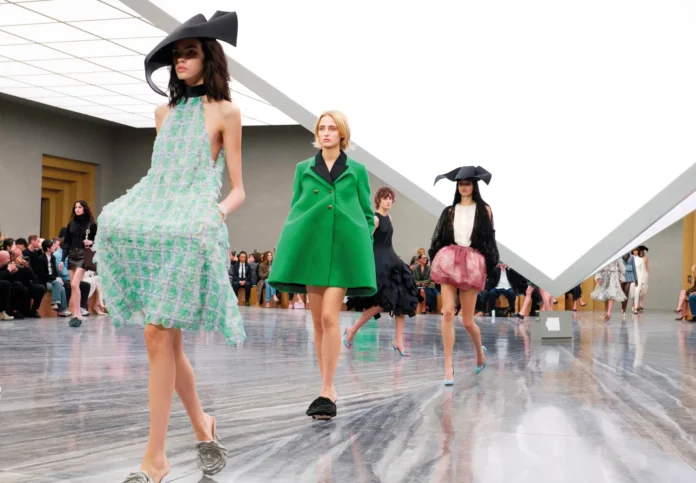
There are seasons defined by novelty, and there are seasons defined by correction. This one belongs to the latter. Across major collections, spring summer 2026 runway presentations suggest a broader recalibration—what many are calling a Great Reset. The shift is not built on a single trend, but on a collective return to clarity: stronger structure, cleaner proportions, and a more deliberate relationship between minimalism and expression.

That is why the conversation matters now. After cycles shaped by extremes—oversized volumes, hyper-styling, and conceptual overload—the spring summer 2026 runway season signals a quieter but more significant evolution. Designers are not retreating from innovation; they are editing it. This direction has emerged consistently from Milan to Paris, echoing patterns already noted in Runway Magazine’s reporting on seasonal runway shifts.

At the center of the reset sits spring summer 2026 runway structure itself. Tailoring returned with sharper intent, yet lighter construction. Garments held form without heaviness. Volume moved closer to the body. As a result, the silhouette felt controlled rather than imposed.

Sculpted Tailoring as Modern Power

The strongest expression of this shift emerged through the sculpted tailoring trend. Jackets curved through the waist, shoulders gained precision, and the hourglass silhouette runway returned not as revival, but refinement. Designers approached power dressing with restraint, allowing shape to create authority.

This movement aligns with Runway Magazine’s earlier analysis of modern tailoring evolution, where structure increasingly functions as a language of confidence rather than severity. It also connects to broader conversations around modern tailoring fashion as investment dressing regains relevance.

Importantly, this did not unfold in isolation. Footwear moved in the same direction, favoring sharper profiles, while beauty leaned toward minimal finishes that reinforced the clean precision of the clothes.

The Return of the Clean Slate

At the same time, the “reset” revealed itself through reduction. Minimalist fashion 2026 appeared less austere than intentional, centered around foundational pieces that carried new importance. The white shirt trend runway emerged repeatedly, often styled within monochrome systems that gave familiar garments renewed weight.

That is where the monochrome fashion trend felt especially relevant. It did not read as absence, but as concentration. By limiting distraction, designers emphasized proportion, fabrication, and cut.

Consequently, spring summer 2026 runway collections suggested that minimalism has moved beyond aesthetic preference into strategy. In a moment saturated by excess, simplicity reads as confidence.

Color Returns With Force

Yet restraint did not exclude energy. One of the most notable counterpoints came through runway color trends, where cobalt, red, and yellow reappeared in assertive combinations. Rather than decorative accents, these colors functioned structurally—shaping entire looks.

The rise of the cobalt blue fashion trend in particular signaled a broader appetite for saturated color used with discipline. This balance between purity and boldness defines much of the season’s tension.

As explored in Runway’s coverage of emerging luxury palettes, color now operates less as embellishment and more as directional statement. That shift gives even vivid combinations a measured quality.

Contrast as the New Energy

The season also gained momentum through friction. References to underwear as outerwear 2026 introduced exposure against the season’s controlled tailoring, while prep fashion trend 2026 re-emerged through elevated collegiate codes.

This contrast matters. Without it, the Great Reset might have risked reading too disciplined. Instead, these elements introduced disruption, allowing the season to remain dynamic.

Across global fashion weeks 2026, that balance—structure against softness, reduction against provocation—defined the strongest collections. It is also what gives the fashion reset trend 2026 greater credibility than a passing seasonal label.

Where the Reset Leads

What makes this shift significant is not what it rejects, but what it prioritizes. The Great Reset does not erase experimentation; it refocuses it. Through sharper tailoring, calibrated color, and a renewed emphasis on investment dressing, spring summer 2026 runway signals a broader realignment in how fashion defines progress.

That may prove its lasting influence. The strongest industry shifts rarely arrive through rupture. They emerge when many signals begin pointing in the same direction.

This season, they are.

Bessette Blonde Is Defining Spring 2026 Hair Color

Bessette Blonde Is Defining Spring 2026 Hair Color

Bessette Blonde Is Defining Spring 2026 Hair Color

There is a reason bessette blonde has moved beyond salon terminology and into broader cultural conversation. It arrives at a moment when beauty is turning away from extremes and returning to nuance—toward tones that feel expensive because they appear effortless. That shift explains why the shade matters now. Rather than chasing icy brightness or exaggerated contrast, colorists are refining blonde through warmth, dimension, and controlled softness.

Inspired by the enduring visual influence of Carolyn Bessette-Kennedy and amplified by renewed attention through the FX series Love Story, bessette blonde has become one of the most discussed beauty directions of the season. What makes it resonate is not nostalgia alone, but relevance. It aligns with Spring 2026’s broader movement toward quiet luxury, softened tailoring, and understated polish—an evolution also reflected in Runway Magazine’s coverage of refined beauty shifts.

Celebrity colorist Kari Hill helped crystallize the conversation through the “Foiled Cashmere” precision foiling technique, developed using Schwarzkopf BlondMe. As explored alongside Runway’s reporting on dimensional color movements, the technique does not rely on dramatic streaking. Instead, it builds subtle, multi-level lifts that create softness, movement, and a silk-like finish.

Warmth Replaces Ice

The return of warmth marks a significant shift in spring 2026 blonde trends. For years, cool platinum signaled polish. Now, honeyed and creamy butter tones feel more modern because they appear less forced. This is where bessette blonde distinguishes itself. It does not reject brightness, but diffuses it.

The tone evolves gradually—from deeper blonde roots to brighter lengths—mirroring the natural progression often associated with Bessette-Kennedy herself. That controlled transition is why salons increasingly position it as a luxury color rather than a trend-driven shade.

Moreover, the look intersects with adjacent beauty categories. Skin-focused makeup favors similar softness, while fashion’s movement toward neutral tailoring and sun-washed palettes reinforces the same mood. Runway’s analysis of quiet luxury color stories points to this broader cohesion, where hair color no longer operates separately from the fashion narrative.

The Rise of Foiled Cashmere

The “foiled cashmere technique” has accelerated demand because it offers something many clients seek but rarely articulate: visible dimension without visible effort. Rather than producing high-contrast highlights, the method layers tone so the result shifts subtly in light.

That is why bessette blonde has become a frequent salon reference. Clients are asking not simply for blonde, but for texture within blonde—something softer than platinum, richer than beige, and less obvious than traditional balayage.

Importantly, the appeal also lies in maintenance. Because the color grows out gracefully, it supports the larger movement away from rigid beauty upkeep. In this sense, bessette blonde reflects a practical luxury, where longevity carries equal value to visual impact.

A 1990s Reference, Reframed

The return of 1990s beauty references often risks becoming literal. Here, however, the influence feels filtered through contemporary technique. This is not revival for its own sake. It is reinterpretation.

The renewed interest in carolyn bessette kennedy hair color also connects to a wider cultural appetite for restraint. Fashion has revisited clean lines and reduced embellishment; beauty responds with similar discipline. As discussed in Runway Magazine’s coverage of minimal beauty directions, refinement increasingly signals modernity.

At the same time, celebrity influence has amplified adoption. Sarah Pidgeon’s portrayal helped introduce the look to a younger audience, while stylists and salons translated the reference into something wearable. Consequently, bessette blonde moved quickly from editorial inspiration to mainstream request.

Where the Shade Moves Next

What gives this color longevity is its flexibility. It suits the broader move toward dimensional butter blonde, but it can deepen, brighten, or soften without losing identity. That adaptability suggests the trend may extend well beyond spring.

As beauty continues to prioritize tones that feel lived-in rather than overworked, bessette blonde appears less like a passing obsession and more like a recalibration of what luxury blonde means now. The next phase will likely come through even more personalized versions—warmer, deeper, or more diffuse—while preserving the softness that defines it.

That may be the strongest indicator of all. The most enduring beauty shifts rarely arrive as declarations. They enter quietly, then reshape the standard.