🕒 4 min read
Published April 11, 2026
Timothée Chalamet Breaks Menswear Rules Again: The Bold Look Sparking a New Era of Androgynous Fashion
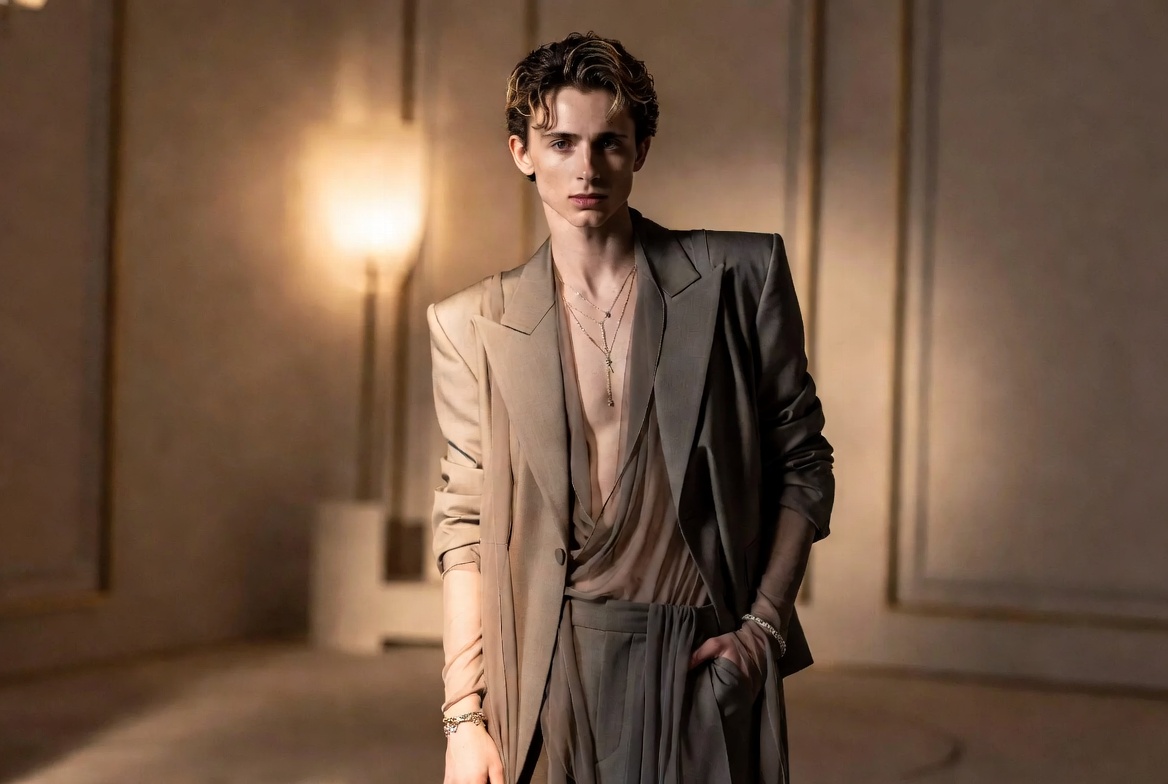
Timothée Chalamet has once again stepped onto the red carpet and quietly rewritten the rules of menswear. In early 2026, his latest public appearance — a carefully constructed ensemble that blurred the lines between masculine tailoring and fluid femininity — ignited intense discussion across fashion circles. The look was neither costume nor rebellion. It was something more precise: a confident assertion that modern masculinity no longer needs rigid boundaries.
Chalamet wore a sharply tailored jacket with exaggerated shoulders paired with a sheer, draped shirt underneath. The trousers were loose and flowing, falling with an almost liquid grace. Delicate jewelry and soft textures completed the composition. What made the outfit powerful was its restraint. There was no shock value for its own sake — only a deliberate, elegant challenge to convention.
This single appearance has accelerated conversations around androgynous menswear 2026 and gender fluid fashion trends. Chalamet has become one of the clearest symbols of a generation that views clothing as a tool for self-expression rather than a uniform of expected gender performance.
A New Vocabulary for Menswear
For decades, menswear operated within narrow parameters: structured shoulders, straight silhouettes, and muted tones. Chalamet’s approach rejects that limitation. He mixes precise tailoring with softer, more romantic elements — sheer fabrics, delicate necklines, and unexpected proportions. The result feels both luxurious and contemporary.
Industry insiders credit him with helping normalize a more expansive definition of masculinity. His choices have encouraged younger men, particularly Gen Z, to explore clothing without fear of judgment. What once might have been dismissed as “feminine” is now increasingly understood as simply stylish.
Timothee Chalamet fashion has become a reference point for designers pushing gender-neutral collections. Several luxury houses have cited his red carpet appearances as inspiration for their latest menswear lines, incorporating more fluid cuts, translucent materials, and softer color palettes.
The Cultural Weight of His Choices
Chalamet’s influence extends beyond aesthetics. In an era when conversations about gender identity and expression dominate cultural discourse, his consistent refusal to conform sends a clear message: clothing can be a space for exploration rather than restriction. He wears pieces that traditionally belong to womenswear without commentary or apology, allowing the clothes to speak for themselves.
Social media has amplified this impact. Discussions around fashion breaking gender norms frequently feature his name. Some praise his courage; others debate whether his style represents genuine progress or calculated celebrity branding. The conversation itself reveals how deeply society still grapples with evolving ideas of masculinity.
Yet Chalamet rarely addresses the noise directly. He lets the work — the careful curation of each look — do the talking. This quiet confidence has only strengthened his position as one of the most watched style figures of his generation.
Designers Respond to the Shift
Major fashion houses have taken notice. Collections presented for Fall/Winter 2026 showed a clear move toward gender-fluid design language: softer suiting, translucent outer layers, and accessories that refuse traditional categorization. Several creative directors have openly acknowledged Chalamet’s influence on their thinking about menswear.
This evolution feels particularly significant for Gen Z fashion trends 2026. Younger consumers increasingly reject binary notions of dressing. They seek pieces that reflect complexity, individuality, and emotional honesty. Chalamet’s style offers a visible blueprint for that desire.
The Future of Masculine Expression in Fashion
Chalamet’s latest look is not an isolated moment. It represents the continuation of a broader cultural shift that has been building for years. As luxury menswear moves further away from rigid tradition, the space for androgynous and gender-fluid expression continues to expand.
His influence suggests that the most compelling style statements in the coming years will come from those willing to move beyond outdated categories. The conversation is no longer about whether men can wear certain fabrics or silhouettes. It is about how clothing can more accurately reflect the full range of human identity.
In breaking menswear rules with such consistency and elegance, Timothée Chalamet has helped open the door to a more interesting, more honest chapter in fashion. The question now is not whether the industry will follow, but how far it is willing to go.