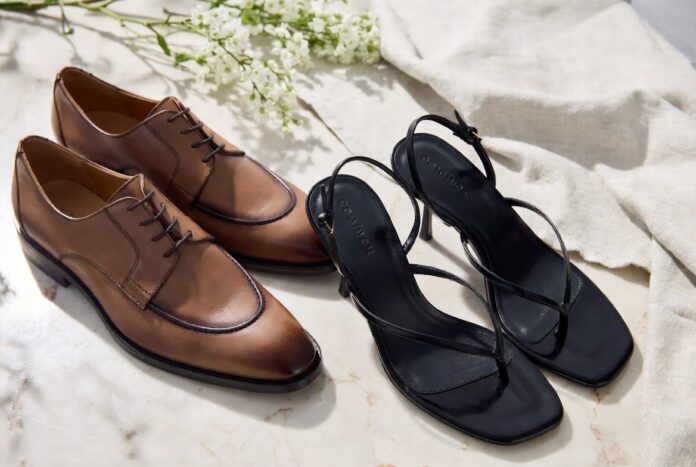
Soft Brogues and Stiletto Flip-Flops Are the Must-Have Shoes

Soft Brogues and Stiletto Flip-Flops Are the Must-Have Shoes

Soft Brogues and Stiletto Flip-Flops Are the Must-Have Shoes for April 2026

A Season Defined by Contrast

April has always functioned as a transitional month, but April fashion shoes in 2026 feel unusually decisive. Instead of easing into the season, footwear has taken a sharper turn—toward contrast, toward clarity, and toward silhouettes that challenge expectation.

At the center of this shift are two styles that, at first glance, appear incompatible: soft brogues and stiletto flip-flops. One is grounded, structured, and rooted in heritage. The other is minimal, exposed, and unapologetically modern. Together, they define the current spring shoe trends, not by similarity, but by opposition.

This duality reflects a broader recalibration in fashion. The industry is moving away from singular narratives and toward multiplicity. There is no longer a single “correct” way to dress. Instead, there are parallel approaches that coexist, often within the same wardrobe.

The emergence of soft brogues 2026 alongside the resurgence of heeled thong sandals captures this moment precisely. It is not about choosing between comfort and statement, but about understanding how both can operate simultaneously.


The Rise of the Soft Brogue

The return of brogues is not new. What distinguishes this season is their transformation. The soft brogues 2026 trend reimagines a traditionally rigid shoe through material and construction. Leather is more pliable, soles are lighter, and the overall silhouette feels less formal.

This evolution has allowed brogues to move beyond their conventional associations. No longer confined to suiting, they now integrate seamlessly into everyday dressing. Worn with denim, they introduce structure. Paired with tailoring, they soften it.

Brands have played a significant role in this shift. At Stella McCartney, brogues appear with a refined minimalism that emphasizes line over ornamentation. Meanwhile, Mango offers accessible interpretations that highlight their versatility.

The appeal of soft leather brogues lies in their balance. They provide polish without rigidity, making them a compelling alternative to ballet flats, which have dominated recent seasons. Where flats can feel overly delicate, brogues introduce a sense of intention.

This is not a nostalgic return. It is a recalibration—one that aligns with a growing preference for shoes that combine structure with ease.


Stiletto Flip-Flops and the Return of Deliberate Glamour

If brogues represent grounding, stiletto flip flops embody elevation in its most literal sense. The silhouette—often referred to as the heeled thong sandal—has re-emerged with a clarity that feels both nostalgic and newly assertive.

The heeled flip flops trend draws from early 2000s references, but its current iteration is more controlled. Straps are finer, heels are sharper, and the overall design avoids excess. The effect is streamlined, almost architectural.

What makes this revival particularly compelling is its context. These shoes are no longer reserved for eveningwear. They appear alongside tailoring, denim, and even minimalist day looks. This recontextualization shifts their meaning. They become less about occasion and more about attitude.

The popularity of flip flop heels 2026 also reflects a renewed interest in exposure. After seasons dominated by heavier footwear, there is a return to silhouettes that reveal rather than conceal. The foot becomes part of the composition, rather than simply a foundation.

There is, inevitably, a question of comfort. But in this case, discomfort is not the point. The appeal lies in precision—the exact angle of the heel, the minimalism of the strap, the deliberate nature of the design.


Why These Opposites Work Together

At first glance, pairing soft brogues 2026 with stiletto flip flops within the same trend cycle seems contradictory. One prioritizes comfort and structure; the other emphasizes exposure and elevation. Yet this contrast is precisely what defines the current spring shoe trends 2026.

Fashion is increasingly operating through juxtaposition. It is no longer about coherence in the traditional sense, but about tension. The coexistence of these two styles reflects a broader willingness to embrace contradiction.

This duality also mirrors how people dress. A single wardrobe now accommodates multiple identities—professional, casual, expressive—often within the same day. Footwear must adapt accordingly.

Brogues and stiletto flip-flops offer different solutions to the same question: how to complete an outfit with intention. One grounds, the other sharpens. Both, in their own way, define the look.


How to Style April’s Most Talked-About Shoes

Understanding how to approach April fashion shoes requires attention to proportion and context. With brogues, the emphasis is on balance. A structured shoe benefits from contrast—whether through relaxed denim or fluid tailoring. The goal is to avoid rigidity.

Brogues’ outfit ideas often rely on subtle shifts. A cropped trouser highlights the shoe’s detailing, while a longer hemline creates a more understated effect. Both approaches work, depending on the desired outcome.

Stiletto flip-flops, by contrast, demand precision. Their minimalism leaves little room for excess. Pairing them with clean lines—whether in a tailored pant or a simple dress—allows the shoe to function as a focal point.

The versatility of stiletto flip flop outfits lies in their adaptability. They can elevate a casual look or refine a more formal one. What matters is clarity. Each element should feel intentional.


Footwear and the Shift in Everyday Dressing

The prominence of these styles reflects a broader shift in how fashion approaches daily dressing. Shoes are no longer secondary. They are central to the composition.

The rise of spring footwear 2026 underscores this change. Instead of defaulting to familiar options, consumers are exploring silhouettes that offer both function and distinction. Brogues and stiletto flip-flops meet this demand in different ways.

This shift also speaks to a growing awareness of detail. As outfits become more streamlined, individual elements carry greater weight. The choice of shoe can define the entire look.

The appeal of these trends lies in their specificity. They do not attempt to satisfy every preference. Instead, they offer clear, distinct options—each with its own logic.


The Influence of Runway and Street Style

The visibility of both styles across fashion week shoe trends has reinforced their relevance. On the runway, they appear in controlled, curated contexts. On the street, they are adapted, reinterpreted, and often simplified.

This interaction between runway and street style is central to how trends now evolve. Designers introduce the concept, but its longevity depends on how it is worn beyond the show.

The success of soft brogues 2026 and stiletto flip flops suggests that both have crossed that threshold. They are no longer confined to editorial spaces. They are being integrated into everyday wardrobes.


What These Shoes Signal for Fashion’s Next Move

The coexistence of brogues and stiletto flip-flops points toward a broader direction for fashion. It suggests a move away from uniformity and toward plurality.

The current spring shoe trends 2026 are less about dictating a single aesthetic and more about offering a range of possibilities. This approach reflects a more nuanced understanding of style—one that accommodates difference rather than erasing it.

As the season progresses, these shoes will likely evolve. New variations will emerge, and styling approaches will shift. But their significance will remain.

They mark a moment when fashion chose contrast over consensus—and found clarity in the process.


Conclusion

The dominance of April fashion shoes this season lies not in a single silhouette, but in the dialogue between two. Soft brogues and stiletto flip-flops represent different approaches to dressing, yet both feel equally relevant.

The strength of soft brogues in 2026 is their ability to ground an outfit with ease. The appeal of stiletto flip flops lies in their precision and edge. Together, they redefine what it means to complete a look.

Spring 2026 will not be remembered for uniformity. It will be remembered for contrast—for the willingness to embrace opposing ideas and allow them to coexist.

In that sense, the season’s most important accessory is not a specific shoe, but a shift in perspective.
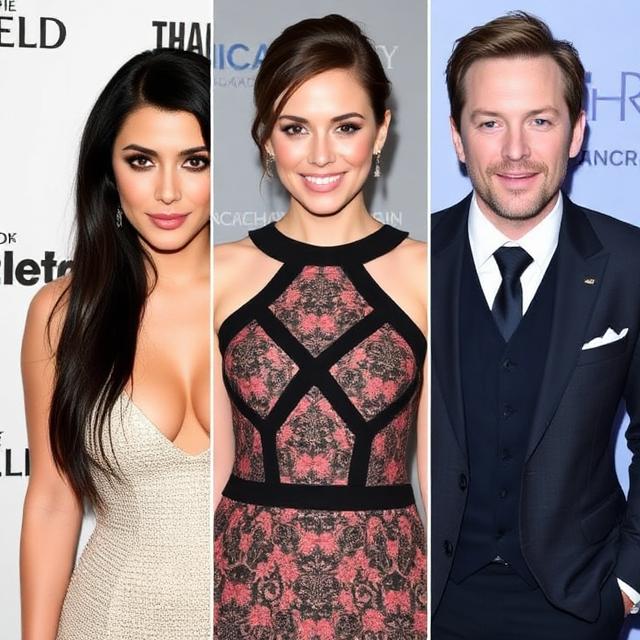
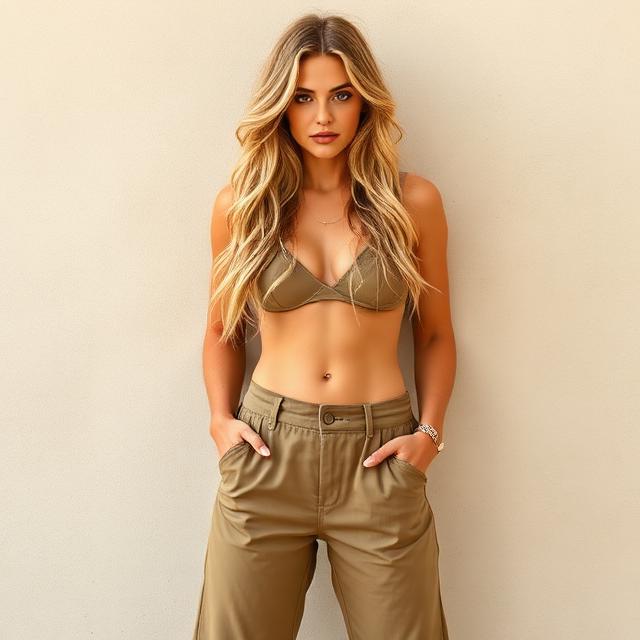
Celebrity Birthdays April —Kardashian, Ferrera, Tennant

Birthdays Today — Kourtney Kardashian, America Ferrera, David Tennant

Celebrity Birthdays Today — Kourtney Kardashian, America Ferrera, and David Tennant Mark Another Year in the Spotlight

The Cultural Ritual of Celebrity Birthdays

The phenomenon of celebrity birthdays, April 18 2026 extends far beyond a simple acknowledgment of age. It has become a ritualized moment in the digital calendar, one that blends nostalgia, branding, and audience participation into a single, highly visible event. Each year, April 18 draws attention not only because of who is celebrating, but because of how the celebration unfolds across platforms.

What distinguishes today’s birthday culture is its immediacy. Tributes appear in real time, curated by fans, amplified by media outlets, and often reshared by the celebrities themselves. The cycle is fast, but it is also layered. Throwback images, career retrospectives, and personal milestones converge into a narrative that feels both intimate and performative.

This year, the focus falls on three figures whose careers have shaped distinct corners of the entertainment landscape: Kourtney Kardashian, America Ferrera, and David Tennant. Their birthdays do not simply mark the passage of time. They serve as cultural checkpoints, inviting reflection on influence, reinvention, and relevance.

The enduring appeal of these annual moments lies in their dual function. They celebrate individual achievement while reinforcing the collective fascination with celebrity itself. In an era defined by constant content, birthdays offer a rare opportunity to pause—and to reassess.


Kourtney Kardashian Birthday: Personal Life as Luxury Narrative

The Kourtney Kardashian birthday arrives each year with a level of visibility that few public figures can command. Her influence operates at the intersection of lifestyle, fashion, and personal branding, where the boundaries between private life and public narrative are deliberately blurred.

Kardashian’s evolution has been particularly striking in recent years. Once defined primarily by her role within a reality television dynasty, she has repositioned herself as a curator of a specific aesthetic—one that leans toward minimalism, wellness, and a certain understated luxury. Her platform is no longer confined to television. It extends into product lines, editorial collaborations, and a carefully managed digital presence.

Birthdays, in this context, become more than celebratory markers. They function as brand moments. The imagery shared—whether archival or newly staged—reinforces a consistent visual language. It is a form of storytelling that relies on continuity rather than surprise.

The fascination with Kardashian’s age, often reflected in search trends, speaks to a broader cultural curiosity about longevity in the public eye. How does a figure maintain relevance across shifting media landscapes? The answer, in her case, lies in adaptation without rupture. Each year builds upon the last, creating a narrative that feels both stable and evolving.


America Ferrera Birthday: Representation, Reframed

The America Ferrera birthday carries a different kind of cultural weight. Her career has been defined not by ubiquity, but by impact. From early roles that challenged industry norms to more recent projects that expand the scope of representation, Ferrera’s trajectory reflects a deliberate engagement with the structures of Hollywood.

Her presence in the celebrity birthdays April 18 2026 conversation underscores the importance of narrative depth. Ferrera’s work often resists easy categorization. It moves between comedy and drama, mainstream success and independent credibility. That versatility has allowed her to remain relevant without conforming to a single archetype.

What emerges from the annual reflection on her career is a sense of continuity. Ferrera has consistently aligned her professional choices with broader cultural conversations. Whether addressing issues of identity, gender, or representation, she approaches her work with a clarity of purpose that resonates beyond the screen.

Birthdays, in this context, invite a reassessment of influence. They prompt audiences to revisit performances, to reconsider their significance, and to place them within a larger cultural framework. Ferrera’s impact is not measured solely by visibility, but by the conversations her work continues to generate.


David Tennant Birthday: The Endurance of Reinvention

The David Tennant birthday highlights a career built on transformation. Known for his ability to inhabit a wide range of characters, Tennant has navigated the demands of both mainstream and niche audiences with remarkable ease.

His work in television, theater, and film reflects a commitment to craft that transcends genre. From iconic roles that have achieved global recognition to more understated performances that showcase his range, Tennant’s career resists stagnation. Each project introduces a new dimension, reinforcing his reputation as an actor capable of continual reinvention.

Within the framework of celebrity birthdays, April 18 2026, Tennant represents a different model of longevity. His relevance is not tied to constant visibility, but to the enduring appeal of his performances. Audiences return to his work not out of habit, but out of genuine engagement.

The annual acknowledgment of his birthday becomes an opportunity to revisit that body of work. It encourages a deeper appreciation of the nuances that define his अभिनय—subtle shifts in tone, precise timing, and an ability to convey complexity without excess.


Why April 18 Continues to Capture Attention

There is a reason April 18 consistently generates interest within the ecosystem of celebrity birthdays April 18 2026. The convergence of multiple high-profile figures creates a moment of collective focus, one that extends beyond individual fandoms.

This clustering effect amplifies visibility. Media outlets produce roundups, social platforms curate trending topics, and audiences engage with a shared narrative. The result is a feedback loop in which attention reinforces itself.

The appeal of these moments lies in their accessibility. Unlike premieres or award shows, birthdays require no formal invitation. They are open-ended events, shaped as much by audience participation as by the celebrities themselves. This inclusivity contributes to their viral potential.

At the same time, the repetition of the ritual introduces a sense of familiarity. Audiences know what to expect, even as the specifics change each year. It is this balance between predictability and variation that sustains interest.


The Social Media Amplification Effect

The scale of engagement surrounding celebrity birthdays, April 18 2026 would be unimaginable without the infrastructure of social media. Platforms have transformed what was once a private milestone into a public spectacle, complete with metrics, trends, and algorithmic amplification.

Tributes now function as a form of currency. Fans compete to create the most compelling posts, while brands and media outlets leverage the moment to align themselves with trending conversations. The result is a highly orchestrated environment that still manages to feel spontaneous.

This dynamic has implications for how celebrity is understood. Visibility is no longer a byproduct of achievement; it is an ongoing process that requires constant engagement. Birthdays, with their built-in narrative, provide an ideal framework for this engagement.

Yet there is also a countercurrent. Amid the volume of content, moments of genuine reflection still emerge. A well-chosen photograph, a thoughtful caption, a revisited performance—these elements cut through the noise, reminding audiences of the individuals behind the personas.


The Modern Celebrity Calendar

The prominence of celebrity birthdays on April 18 2026 reflects a broader shift in how time is organized within the entertainment industry. Traditional milestones—film releases, award seasons, fashion weeks—are now complemented by a continuous stream of micro-events.

Birthdays occupy a unique position within this calendar. They are both predictable and personal, offering a recurring opportunity for engagement. Their significance is not fixed; it evolves with each passing year, shaped by the trajectories of the individuals involved.

For figures like Kardashian, Ferrera, and Tennant, these moments serve as markers within larger narratives. They highlight achievements, signal transitions, and invite speculation about what comes next. In doing so, they reinforce the cyclical nature of celebrity itself.


Conclusion

The enduring appeal of celebrity birthdays, April 18 2026 lies in its ability to capture multiple dimensions of contemporary culture at once. It is a moment of celebration, certainly, but also one of reflection and recalibration.

Kourtney Kardashian’s carefully constructed lifestyle narrative, America Ferrera’s commitment to meaningful representation, and David Tennant’s dedication to craft each offer distinct models of longevity. Their birthdays provide a lens through which to examine not only their individual careers, but the evolving nature of fame itself.

As the digital landscape continues to reshape how audiences engage with public figures, these annual milestones will likely grow in significance. They offer a rare point of continuity in an environment defined by constant change.

In the end, the fascination is not simply with who is celebrating, but with what their journeys reveal. Birthdays, after all, are less about counting years than about measuring impact.

Capri Pants Are Back — The Surprising Trend Spring 2026

Capri Pants 2026 Are Back — The Surprising Trend Spring 2026

Capri Pants Are Back — The Surprising Trend Taking Over Spring 2026

The Return of a Divisive Silhouette

The re-emergence of capri pants 2026 is not subtle. It is, in many ways, confrontational. Few garments carry the same level of cultural baggage—oscillating between mid-century elegance and early-2000s overexposure. And yet, this season, capris have returned with a clarity that feels less nostalgic and more strategic.

What distinguishes this revival is its timing. After years dominated by wide-leg trousers and relaxed tailoring, fashion has begun to reconsider proportion. The ankle—long ignored or exaggerated—is once again a focal point. Capri pants, with their cropped precision, reintroduce that emphasis in a way that feels deliberate.

The current spring 2026 pants trends are less about volume and more about control. Capris fit neatly into that shift. They offer structure without rigidity, exposure without excess. The silhouette is concise, almost architectural, and that concision reads as modern.

Still, the hesitation surrounding capris has not disappeared. Their history makes them inherently polarizing. But perhaps that is precisely why they matter now. In a landscape saturated with consensus, a divisive piece has the power to redefine taste.


Why Capri Pants Feel Relevant Again

The renewed interest in the capri trend 2026 reflects more than cyclical nostalgia. It signals a shift in how fashion approaches familiarity. Rather than discarding past silhouettes, designers are reworking them—retaining their core identity while adjusting their context.

Capris benefit from this approach because their structure is inherently adaptable. A slight adjustment in length, a change in fabric, or a reimagined waistband can transform the entire look. What once felt dated can become unexpectedly current.

Search data underscores this shift. Interest in capris has surged dramatically, driven in part by their visibility across both runways and social media. But visibility alone does not sustain a trend. What matters is wearability.

This is where capris succeed. They bridge the gap between tailored and casual, offering a flexibility that aligns with contemporary dressing habits. They are as suited to a structured blazer as they are to a fitted tank or knit.

The appeal of cropped trousers spring lies in this balance. They provide a sense of intention without requiring a complete stylistic overhaul.


From Retro Reference to Runway Reset

Designers have approached the capri revival with a level of restraint that feels calculated. At Stella McCartney, the silhouette appears in clean, tailored forms that emphasize line over decoration. The result is a version of capris that feels grounded rather than playful.

Meanwhile, Mango has leaned into accessibility, offering interpretations that translate easily into everyday wardrobes. Their approach highlights the commercial viability of the trend, proving that capris can move beyond the runway without losing coherence.

Across collections, the emphasis remains consistent: refinement. Fabrics are sharper, cuts are more precise, and styling avoids excess. This is not a return to capris as they were once worn. It is a recalibration.

The presence of capri trousers runway moments across multiple fashion weeks reinforces this shift. What was once considered a niche or even outdated silhouette has been repositioned as a central element of the season.


How to Wear Capris in 2026 Without Looking Dated

Understanding how to wear capris 2026 requires a shift in perspective. The goal is not to replicate past iterations, but to reinterpret the silhouette within a contemporary framework.

Footwear plays a defining role. Pairing capris with loafers or brogues introduces a sense of structure, grounding the look. Stiletto flip-flops, by contrast, create tension—an interplay between casual and formal that feels distinctly current.

Proportion is equally important. A fitted or cropped top balances the abbreviated length of the trousers, while an oversized blazer can introduce contrast. The key is intentionality. Every element should feel considered.

Fabric choice further refines the outcome. Structured materials lend capris a tailored quality, while softer fabrics push them toward casual territory. Both approaches work, provided they are executed with clarity.

The versatility of capri pants outfits lies in their ability to adapt. They can be minimal or layered, understated or expressive. What matters is coherence.


The New Language of Cropped Trousers

The broader resurgence of cropped trousers spring extends beyond capris alone. It reflects a renewed interest in the lower leg as a site of expression. Hemlines are becoming more precise, more intentional.

This shift aligns with a larger movement toward detail-oriented dressing. As silhouettes become more streamlined, smaller elements gain significance. The exact length of a trouser, the break at the ankle, the relationship between shoe and hem—these details now carry weight.

Capris, in this context, function as a focal point. They draw attention to these subtleties, encouraging a more considered approach to styling. The result is a wardrobe that feels curated rather than assembled.

The success of the capri trend 2026 suggests that fashion is moving toward a more nuanced understanding of proportion. It is no longer enough for a garment to fit. It must also articulate.


Capri Pants and the Politics of Proportion

Few trends provoke as much debate as capris. Their length disrupts conventional proportions, challenging established ideas about what is flattering. This tension is part of their appeal.

The current wave of capri pants 2026 embraces that disruption. Rather than attempting to universalize the silhouette, it acknowledges its specificity. Capris do not aim to suit everyone in the same way. They invite interpretation.

This perspective aligns with a broader shift in fashion toward individuality. Trends are no longer prescriptive. They are suggestive. Capris, with their inherent ambiguity, fit neatly into this framework.

The conversation around divisive fashion trends 2026 often centers on wearability. But wearability itself is evolving. It is becoming less about conformity and more about expression.


From Pilates to Evening: The Versatility Shift

One of the most notable aspects of the capri revival is its range. The same silhouette appears across contexts that were once considered incompatible. From Pilates studios to evening settings, capris are being recontextualized.

This versatility is driven by styling. In athletic contexts, capris are paired with performance fabrics and minimal accessories. In more formal settings, they are elevated through tailoring and material choice.

The adaptability of spring 2026 pants trends reflects a broader shift toward multifunctional dressing. Garments are expected to move across environments without losing their integrity.

Capris, perhaps unexpectedly, meet that expectation. Their simplicity allows them to absorb different influences without becoming diluted.


Will the Capri Trend Last?

The question of longevity is inevitable. Trends that re-emerge after periods of absence often face skepticism. Will they endure, or will they fade as quickly as they returned?

The strength of the capri trend 2026 lies in its adaptability. It is not tied to a single aesthetic or demographic. It can evolve, shifting in response to broader changes within fashion.

At the same time, its divisive nature may limit its reach. Capris are unlikely to achieve universal acceptance. But perhaps that is not the goal. Their impact may be measured less by ubiquity and more by influence.

What seems clear is that capris have re-entered the conversation in a meaningful way. They have moved from the periphery to the center, challenging assumptions and expanding possibilities.


Conclusion

The return of capri pants 2026 is not a simple revival. It is a reconsideration—of proportion, of history, and of how trends evolve. What once felt outdated now feels intentional, even necessary.

The success of the silhouette lies in its tension. It is both familiar and unfamiliar, accessible and challenging. It invites engagement, whether through adoption or critique.

As Spring 2026 unfolds, capris will continue to provoke discussion. They may not define the season entirely, but they will shape it in subtle, lasting ways.

In a fashion landscape that often prioritizes consensus, their refusal to conform is precisely what makes them relevant.

Ella Langley Holds Strong at No. 1 – Billboard Hot 100 April Top 10

Ella Langley Holds Strong at No. 1 - Billboard Hot 100 April Top 10

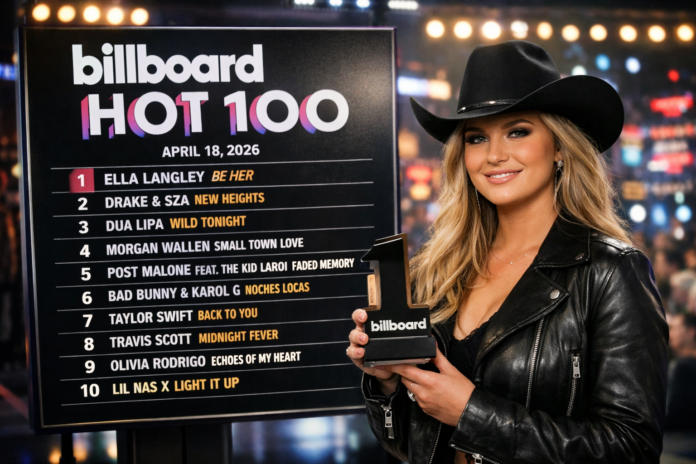
Billboard Hot 100 Top 10 for April 18, 2026 — Ella Langley Holds Strong at No. 1

The Chart That Refuses to Sit Still

The billboard hot 100 April 18 2026 arrives at a moment when the industry feels unusually fluid. Genres are dissolving into each other faster than radio can categorize them, and the charts—once predictable in their rhythms—now move with the velocity of social platforms. Yet, amid this churn, one presence remains remarkably steady.

Ella Langley’s “Be Her” sits firmly at No. 1, extending what is shaping into one of the most closely watched chart runs of the year. The single’s hold is not accidental. It reflects a broader recalibration of mainstream taste, where country storytelling meets pop-scale production without apology. The result is a record that feels both rooted and expansive, capable of reaching listeners who may not have previously identified with country music at all.

This week’s hot 100 top 10 is less about disruption and more about tension—between stability and movement, between legacy artists and emerging voices, and between songs engineered for virality and those that earn their momentum gradually. The current billboard chart update reveals a landscape where longevity is becoming just as valuable as explosive debuts.

The question is no longer whether a song can debut high. It’s whether it can stay.


The Staying Power of a No. 1 Record

“Be Her” has now entered a phase that separates major hits from cultural fixtures. Sustaining a No. 1 position deep into its run requires more than streaming spikes or radio rotation. It demands emotional durability—the kind that encourages repeat listening without fatigue.

What makes ella langley be her particularly resilient is its tonal balance. It carries the intimacy of a confessional ballad but is structured with the precision of a crossover hit. The production avoids excess, allowing Langley’s vocal phrasing to carry the narrative weight. There’s restraint in the arrangement, and that restraint translates into replay value.

Historically, songs that dominate for extended periods often reflect a broader cultural mood. “Be Her” aligns with a current appetite for sincerity—music that feels personal rather than performative. In a market saturated with high-concept releases, its relative simplicity becomes a strategic advantage.

There is also a structural factor at play. Streaming algorithms reward consistency, and “Be Her” has remained stable across platforms. It hasn’t relied on a single viral moment. Instead, it has accumulated engagement steadily, week after week. That kind of performance is harder to disrupt.


Country-Pop’s Expanding Center

The rise of artists like Langley signals a shift that has been building quietly for years. Country music is no longer orbiting the mainstream; it is actively shaping it. The current billboard hot 100 April 18 2026 reflects this evolution with unusual clarity.

Country-pop crossovers now operate without the friction that once defined the genre’s relationship with pop radio. The sound has broadened, incorporating elements of rock, folk, and even subtle electronic textures. What remains consistent is the emphasis on narrative.

Langley’s trajectory exemplifies this transition. Her work draws from traditional country influences while embracing a wider sonic palette. That duality allows her to move across formats without losing coherence. It also positions her within a lineage of artists who have expanded the genre’s reach without diluting its identity.

This week’s chart underscores that shift. Several tracks climbing within the top tier share a similar hybridity. They are not strictly country, nor are they purely pop. They exist in a space that feels increasingly central rather than peripheral.


Viral Velocity and the New Chart Economy

The mechanics behind the billboard chart update have changed in ways that are both subtle and profound. Viral moments can still propel a song into the upper ranks, but sustaining that position requires a different kind of engagement.

Short-form platforms continue to influence discovery, but they no longer guarantee longevity. Listeners may encounter a track through a trend, but they decide its staying power through repeated listening. This distinction is shaping how labels approach release strategies.

Several songs within this week’s hot 100 top 10 illustrate this dynamic. Some have surged due to sudden spikes in visibility, often tied to cultural moments or influencer-driven trends. Others have climbed more gradually, building momentum through consistent streaming and radio support.

The contrast between these trajectories is instructive. Viral acceleration can create immediate impact, but it often lacks the structural support needed for long-term chart presence. By comparison, tracks that develop organically tend to exhibit greater resilience.

Langley’s position at No. 1 reflects the latter model. The success of ella langley be her is not tied to a single moment of visibility. It is the result of sustained engagement across multiple channels.


The April 18 Billboard Chart: Who’s Rising, Who’s Waiting

The composition of this week’s top tier reveals a balance between established names and emerging voices. While the upper positions remain relatively stable, there is notable movement just beneath them.

New entries are arriving with significant momentum, often driven by streaming surges that reflect immediate audience response. At the same time, several tracks are re-entering the chart, buoyed by renewed attention—whether through live performances, media exposure, or unexpected cultural relevance.

The billboard hot 100 april 18 2026 captures this interplay. It is a chart defined not by abrupt shifts but by incremental changes that signal deeper trends. Songs are not simply rising or falling; they are repositioning within a broader ecosystem.

For industry observers, these movements offer insight into audience behavior. They reveal which tracks are gaining traction beyond their initial release window and which are struggling to maintain visibility. The data is granular, but the implications are wide-reaching.


The Industry Watches Closely

There is a sense of anticipation surrounding the current chart cycle. The question is not just how long Langley can hold the top position, but what her sustained success signals for the industry as a whole.

A prolonged No. 1 run often influences release schedules. Competing artists may delay major drops to avoid direct competition, while labels recalibrate their strategies in response to shifting audience preferences. The ripple effects extend beyond a single chart.

The endurance of ella langley be her is also shaping conversations around genre boundaries. It challenges the assumption that crossover success requires compromise. Instead, it suggests that authenticity—when paired with strong songwriting—can achieve mainstream reach without dilution.

This moment is being closely monitored by executives, producers, and artists alike. It offers a case study in how a record can achieve both commercial success and cultural resonance.


What Comes After a Cultural Peak

The trajectory of a No. 1 hit inevitably raises questions about what follows. Sustained chart dominance creates expectations that can be difficult to meet. The next release is often judged against the previous peak, sometimes unfairly.

For Langley, the current run represents both an achievement and a transition. It solidifies her position within the industry while setting the stage for what comes next. The challenge will be to evolve without losing the qualities that made “Be Her” resonate so widely.

The broader implications extend beyond a single artist. The billboard hot 100 April 18 2026 suggests that the industry is entering a phase where longevity and adaptability are becoming increasingly important. Success is no longer defined solely by peaks but by the ability to sustain relevance over time.

As the chart continues to evolve, one thing remains clear. The conversation is shifting—from how songs debut to how they endure.


Conclusion

The current billboard hot 100 April 18 2026 is less about a snapshot and more about a narrative in motion. Ella Langley’s continued hold at No. 1 reflects a convergence of factors—authentic songwriting, strategic release dynamics, and a changing audience landscape.

What stands out is not just the dominance of a single track, but the way it has redefined expectations. The hot 100 top 10 now feels like a space where longevity carries as much weight as immediacy, where songs are measured by their ability to remain rather than simply arrive.

The industry will continue to adapt, as it always does. New entries will challenge the current order, and emerging artists will reshape the conversation. Yet for now, the story belongs to a song that refuses to fade—and to a chart that is learning how to value staying power in a culture defined by speed.


Teal Is the Official Color of Spring 2026 — Here’s How to Wear It

Teal Is the Official Color of Spring 2026 — Here’s How to Wear It -teal fashion trend 2026

Teal Is the Official Color of Spring 2026 — Here’s How to Wear It

A Season Defined by Saturation

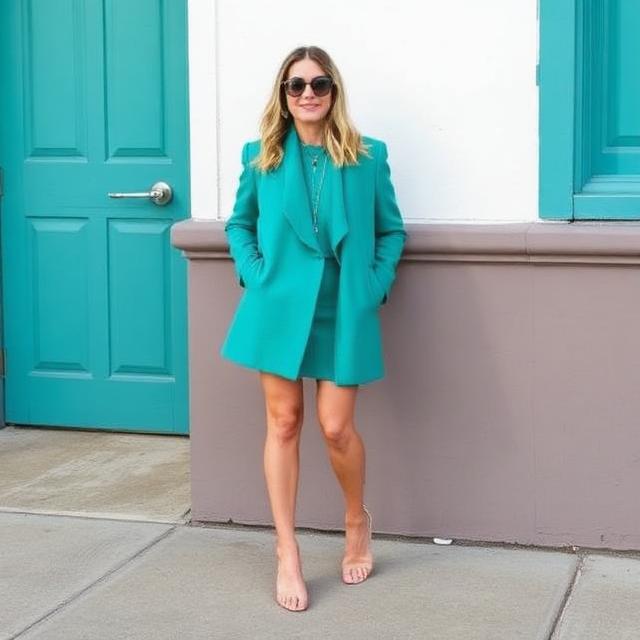
The teal fashion trend 2026 did not arrive quietly. It entered the season with a level of confidence that feels almost corrective—a response to years of muted palettes and predictable spring pastels. Across runways and street style, teal has emerged as the color that refuses to blend in, offering a saturated alternative that feels both modern and unexpectedly versatile.

This shift is not simply aesthetic. It reflects a broader recalibration within fashion, where color is once again being treated as a primary language rather than a supporting detail. Teal, with its balance of blue and green, occupies a unique position within that language. It carries the calm of one and the vitality of the other, creating a tone that feels grounded yet expressive.

The current spring color trends suggest a move away from fragility. Instead of whisper-soft hues, designers are embracing shades that hold their own. Teal, in this context, becomes a statement without requiring excess. It is bold, but not aggressive. Distinct, but not difficult.

What makes this moment particularly compelling is its accessibility. Unlike more polarizing colors, teal adapts. It works across skin tones, across silhouettes, and across occasions. It invites experimentation without demanding it.


From Pastel Fatigue to Chromatic Confidence

For several seasons, spring dressing has been defined by restraint. Pastels dominated, offering a sense of softness that aligned with a broader minimalism. But repetition has a way of dulling even the most elegant ideas. By early 2026, that palette began to feel overly familiar.

The rise of the teal fashion trend 2026 signals a departure from that predictability. It introduces a chromatic confidence that feels deliberate rather than reactive. Designers are no longer tempering color; they are amplifying it.

Teal’s appeal lies in its refusal to be categorized too narrowly. It is not as icy as aqua, nor as dark as forest green. It sits in between, drawing from both ends of the spectrum. This ambiguity gives it range. It can read as polished in tailored pieces, or relaxed in more casual contexts.

There is also a psychological dimension at play. After seasons of visual restraint, there is a growing appetite for color that feels intentional. Teal answers that demand without veering into excess. It offers depth, which is increasingly valued in a fashion landscape that often prioritizes immediacy.


The Runway Shift: Teal as a Power Statement

The presence of teal across Spring 2026 collections was not incidental. It appeared in structured tailoring, fluid eveningwear, and even outerwear—categories that traditionally rely on more neutral palettes. This breadth of application is what transformed it from a seasonal accent into a defining trend.

Designers approached teal with a sense of precision. In tailoring, it replaced navy as the unexpected classic. A sharply cut blazer in teal carries the same authority as its darker counterpart, but with added dimension. In eveningwear, the color took on a different character, shifting under light to reveal subtle variations in tone.

Accessories have also played a role in reinforcing the teal color trend. Bags, shoes, and even eyewear in this shade introduce a controlled pop of color without overwhelming an outfit. The effect is cumulative. Each appearance builds familiarity, making the color feel increasingly essential.

What emerges from these collections is a redefinition of what constitutes a “neutral.” Teal is not neutral in the traditional sense, but it behaves like one. It anchors an outfit while still drawing attention.


How to Wear Teal in 2026 Without Overthinking It

The question of how to wear teal 2026 is less complicated than it might appear. The key lies in understanding its adaptability. Teal does not require a complete wardrobe overhaul. It integrates.

One of the most effective approaches is pairing teal with neutrals. Black sharpens it, creating contrast that feels intentional. White softens it, allowing the color to stand out without becoming dominant. Beige and taupe introduce warmth, making teal feel more grounded.

Denim offers another point of entry. A teal top with classic blue jeans creates a balance that feels effortless. The combination works because both elements share a certain familiarity, even as the color introduces something new.

For those more inclined toward experimentation, monochromatic dressing provides a compelling option. Layering different shades within the teal spectrum creates depth without relying on additional colors. The effect is cohesive, but not flat.

The appeal of teal outfits lies in this flexibility. They can be as understated or as expressive as the wearer chooses.


The Psychology of “Something Teal”

There is a reason the phrase something teal outfits has gained traction alongside the broader trend. It speaks to a styling philosophy rather than a rule. Instead of committing entirely to a single color, the idea is to introduce it strategically.

This approach aligns with how many people actually dress. It acknowledges that trends are often adopted incrementally. A teal bag, a pair of shoes, a tailored jacket—each element adds to the overall look without overwhelming it.

The concept also reflects a shift in how fashion is consumed. Rather than dictating complete transformations, trends now offer modular options. They invite participation at different levels.

Teal, with its balance and depth, lends itself particularly well to this model. It enhances without dominating. It suggests rather than insists.


Styling Teal: Texture, Tailoring, and Contrast

Texture plays a crucial role in how teal is perceived. In matte fabrics, it reads as more subdued, almost understated. In satin or silk, it takes on a luminous quality, shifting with movement and light. This variability allows the color to adapt to different contexts.

Tailoring further refines its impact. A structured silhouette in teal carries a sense of authority, particularly when paired with clean lines. The color adds interest, while the cut maintains discipline.

Contrast, meanwhile, determines how bold the final look appears. Pairing teal with darker tones creates intensity. Combining it with lighter shades produces a more relaxed effect. The balance between these elements defines the overall aesthetic.

The versatility of teal is what sustains the teal fashion trend 2026. It offers multiple interpretations without losing coherence.


Why Teal Is Dominating Social Media

The rise of teal across platforms like TikTok and Instagram is not incidental. It photographs well. It stands out in feeds dominated by neutral tones, catching the eye without appearing forced.

The viral teal trend is also driven by its association with a certain kind of fashion literacy. Wearing teal signals awareness. It suggests an understanding of current spring color trends without relying on overt branding.

Influencers and stylists have embraced the color precisely because it offers this balance. It is recognizable, but not ubiquitous. Distinct, but not divisive.

As a result, teal has become shorthand for a particular aesthetic—one that values intention over excess.


The Future of Color Dressing

The dominance of teal raises broader questions about the direction of fashion. If Spring 2026 is defined by this shade, what follows?

One possibility is a continued exploration of saturated tones. Teal may open the door for other colors that occupy similarly nuanced positions within the spectrum. Another is a deeper engagement with color as a primary design element, rather than an afterthought.

What seems certain is that the appetite for predictability has diminished. The success of the teal fashion trend 2026 suggests that audiences are ready for something more dynamic—something that challenges without alienating.

Teal, in this sense, is both a trend and a transition.


Conclusion

The emergence of teal as the defining shade of the season reflects a broader shift in how fashion approaches color. It signals a move away from safety and toward a more expressive, yet controlled, aesthetic.

The teal fashion trend 2026 succeeds because it offers versatility without compromise. It adapts to different styles, different contexts, and different levels of engagement. It invites experimentation while remaining accessible.

In a landscape that often prioritizes speed and novelty, teal introduces a different kind of value. It endures. Not because it is subtle, but because it is balanced.

Spring 2026 will be remembered not for a single silhouette or accessory, but for a color that redefined how the season feels.


The Soft Girl Hair Era Has Officially Arrived for Spring 2026

The Soft Girl Hair Era Has Officially Arrived for Spring 2026

The Soft Girl Hair Era Has Officially Arrived for Spring 2026

Spring 2026 does not arrive with sharp lines or dramatic reinvention. Instead, it settles in quietly, carried by texture, movement, and restraint. Over the past few seasons, hyper-polished finishes—glassy bobs, rigid silhouettes, and precision-heavy cuts—have dominated the conversation. Now, that dominance is loosening. In its place, a softer, more intuitive aesthetic takes hold: soft girl hair.

This shift reflects more than a change in styling preferences. It signals a recalibration in how beauty functions in everyday life. Rather than presenting hair as something to control, stylists now approach it as something to guide. Movement replaces stiffness. Flexibility replaces perfection.

At the same time, clients have begun to ask different questions. They no longer chase immaculate finishes that collapse after a single day. Instead, they want hair that holds its shape over time, adapts between washes, and evolves naturally. Within that context, soft girl hair 2026 emerges not as a fleeting trend, but as a structural shift in approach.

Language reinforces this transformation. Terms like gentle era hair trends and romantic spring haircuts frame the movement with intention. They suggest ease without carelessness, softness without fragility. As a result, hair becomes less about display and more about continuity—an extension of personal rhythm rather than a disruption of it.


A New Chapter in Hair Typologies

This season does not revolve around a single defining cut. Instead, it introduces a spectrum of shapes that share a common philosophy. Lengths sit in transitional zones, often grazing the shoulders or falling just below. These in-between lengths create freedom without sacrificing form.

The soft sculpted bob anchors this evolution. Unlike its sharper predecessors, it avoids rigid edges and visible geometry. Stylists carve the shape with subtle graduation, allowing the ends to bend and shift naturally. Consequently, the cut feels responsive rather than fixed.

Meanwhile, the modern shag 2026 moves away from its more aggressive past. Earlier versions relied on choppy, disconnected layers. Now, stylists extend those layers and blend them seamlessly. The result feels fluid, almost continuous, as if the hair arranges itself.

Waterfall hair trend interpretations refine this idea even further. In this approach, layering becomes nearly invisible. Hair appears to fall in one uninterrupted motion, yet hidden structure supports every movement. Precision still drives the technique, but it never announces itself.

Across all these variations, one principle holds steady: structure works best when it remains unseen. Instead of emphasizing lines, stylists build internal architecture that encourages natural behavior. Hair responds to air, touch, and environment without losing coherence.


Softly Sculpted Shapes and Airy Layers Define the Season

Airy layers haircut techniques define the texture of the season. Stylists no longer remove weight for volume alone. Instead, they distribute it carefully, allowing strands to separate and reconnect with ease. This controlled diffusion creates softness without sacrificing shape.

As a result, lived-in hair layers have become essential. These layers do not appear freshly cut or overly styled. They settle into place immediately, giving the impression of time rather than effort. That effect requires precision, yet it reads as instinctive.

The effortless bob haircut illustrates this balance clearly. It does not sit perfectly straight, nor does it rely on overt styling. Instead, it bends subtly at the ends, adjusting with movement throughout the day. Because of that flexibility, the cut maintains integrity without rigidity.

Imperfection now plays a deliberate role. A strand that falls out of alignment does not disrupt the look—it completes it. This shift aligns directly with the rise of natural texture spring hair, where individuality shapes the final result.

Romancemaxxing hair, a term gaining traction across digital platforms, captures the emotional tone of this movement. Rather than referencing nostalgia, it builds atmosphere. The softness feels intentional, grounded in presence rather than performance.


Color in the Key of Light: Dimensional Tones Take Over

If cut establishes movement, color defines dimension. For spring 2026, colorists work with light instead of contrast. They build tones in layers, allowing them to shift subtly depending on environment and exposure.

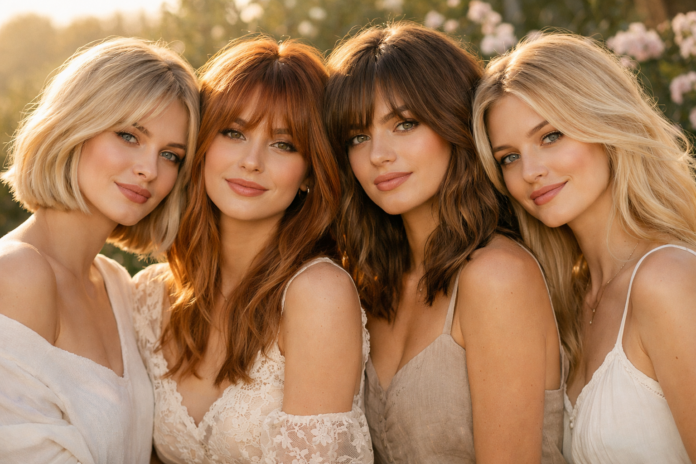
Butter blonde hair leads this direction. It carries warmth without heaviness, sitting between pale gold and soft cream. Colorists diffuse the roots intentionally, which allows the shade to grow out seamlessly. Maintenance becomes less demanding, while the color remains refined.

At the same time, sunlit copper hair introduces depth through warmth. This shade adapts constantly, appearing brighter under direct light and richer indoors. That variability creates interest without requiring stark contrast.

Golden hour brunette follows a similar logic. Instead of placing highlights in obvious sections, colorists mimic how sunlight naturally interacts with hair. The result feels gradual and organic, as though the color developed over time.

Dimensional blonde spring variations continue to move away from high-contrast techniques. Shades now differ subtly rather than dramatically. Because of that restraint, the overall effect feels cohesive and fluid.

Across every shade, one intention remains clear: color should move with the hair. It should reveal itself gradually, shifting as the hair shifts, rather than presenting a fixed visual statement.


The Cultural Shift Behind the Gentle Hair Aesthetic

No trend develops in isolation. The gentle hair aesthetic reflects a broader cultural movement toward ease, clarity, and realism. After years defined by constant visibility and hyper-curation, restraint now carries greater value.

Beauty routines illustrate this shift. Consumers increasingly favor efficiency over excess. They select fewer products, prioritize versatility, and streamline their daily rituals. As a result, hair must support that simplicity rather than complicate it.

Soft girl haircut ideas resonate because they meet that expectation. They provide flexibility without sacrificing intention. Hair adapts to daily life instead of demanding constant correction.

At a deeper level, softness signals comfort. Clean lines and rigid finishes once communicated control. Now, blurred edges and natural movement suggest confidence of a different kind—one rooted in ease rather than precision.

Effortless spring hair trends do not reject technique. Instead, they redirect it. Stylists apply skill in ways that remain invisible, creating results that feel instinctive rather than constructed.


The Future of Effortless Hair

What sets spring 2026 apart is not just the presence of these styles, but their longevity. Each cut and color evolves naturally, reducing the need for constant reinvention.

The soft sculpted bob, for instance, grows into a shoulder-length shape without losing coherence. Airy layers adjust incrementally, maintaining movement as length changes. Similarly, dimensional color fades gradually, avoiding harsh transitions.

Because of this adaptability, soft girl hair extends beyond seasonal relevance. It establishes a long-term framework—one that prioritizes continuity, flexibility, and realism.

Looking ahead, this philosophy will likely influence more than styling alone. Product development, salon services, and editorial narratives will continue to shift in response. The emphasis will remain on ease, but never at the expense of refinement.

There is a quiet authority in that approach. It does not rely on extremes or spectacle. Instead, it builds through consistency and subtlety.

Soft girl hair 2026 does not demand attention. It holds it.


Conclusion

Spring 2026 marks a decisive evolution in how hair is cut, colored, and understood. The movement toward soft girl hair reflects a broader desire for balance—between effort and ease, structure and movement, intention and adaptability.

Rather than abandoning technique, the industry has refined it. Stylists now create shapes that evolve, colors that adapt, and textures that respond naturally. The result feels immediate yet enduring.

In a landscape once defined by precision, softness now signals control of a different kind. It reflects awareness, restraint, and confidence.

This is not a passing phase. It is a recalibration.

Mint Green Nails Are the Breakout Color Trend Dominating Spring

Gen Z Slick Back Ponytail Are Replacing Mermaid Waves

Mint Green Nails Are the Breakout Color Trend Dominating Spring Manicures

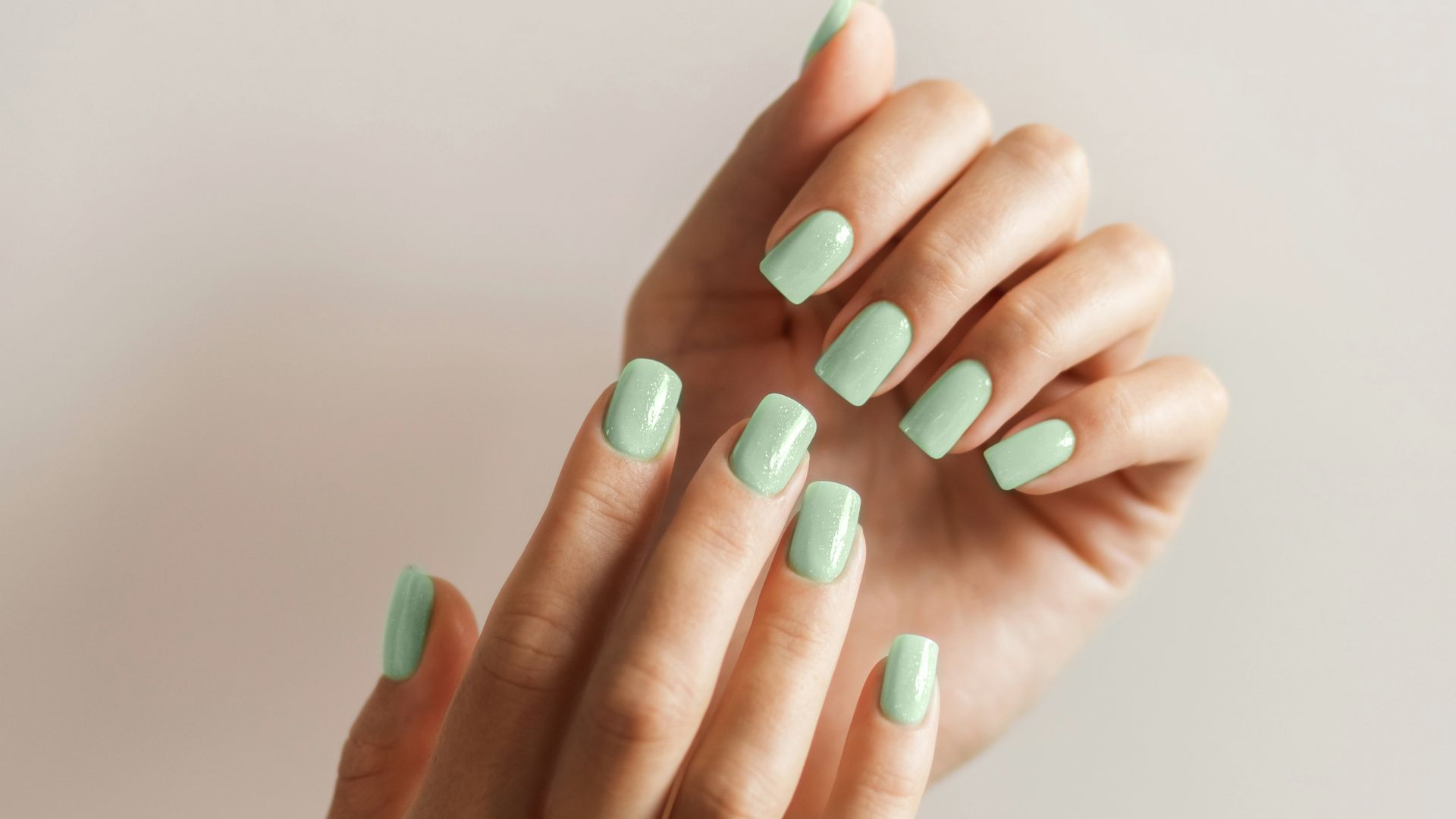
There is a particular shade of green that arrives each spring like a quiet declaration. Not the deep forest tones of winter or the acid brightness of summer, but something lighter, cooler, almost breathable. Mint green nails have surfaced in 2026 as the color that feels inevitable—the one that makes perfect sense the moment you see it on someone’s hands. It carries the crispness of new leaves, the softness of early morning light on grass, and the effortless polish of a well-considered wardrobe choice.

This is not a loud trend. It does not demand attention the way chrome or neon once did. Instead, mint green works through understatement, slipping into everyday looks while elevating them. From minimalist solids to delicate French variations, the shade has become the defining nail color of the season, reflecting a broader desire for renewal that feels both personal and cultural. In salons from Paris to Los Angeles, appointments for “that soft green” have multiplied, signaling that pastel nails 2026 have found their anchor.

The appeal lies in its versatility and emotional resonance. Mint green evokes freshness without fragility, calm without boredom. It pairs naturally with the clean girl aesthetic that continues to influence beauty while allowing room for subtle experimentation. Whether worn alone or combined with gold accents, it reads as modern, intentional, and quietly luxurious.

Why Mint Green Captures Spring 2026

Spring has always been about transition, and mint green nails embody that liminal space beautifully. The shade sits between blue and yellow on the spectrum, offering a cool undertone that flatters a wide range of skin tones while suggesting growth and clarity. Nail artists note that clients arrive seeking something “fresh but not sweet,” and mint consistently delivers.

Unlike more saturated greens, this particular tone avoids heaviness. It feels light on the hand, almost weightless, which aligns with the current preference for nail art that enhances rather than overwhelms. Spring nail colors in 2026 lean toward this kind of restraint, where the polish becomes an extension of personal style rather than a separate statement.

Minty Green Nails: The Unexpected Spring 2026 Color Trend | Nailsami – NAILSAMI

The timing feels right. After several seasons dominated by warmer pastels and bolder statements, mint offers a reset—a color that signals a return to simplicity without sacrificing sophistication. It belongs to the same family as soft sage and powder blue but carries a distinctive crispness that makes it stand out in a sea of similar hues.

The Many Faces of Mint: From Minimalist to Elevated

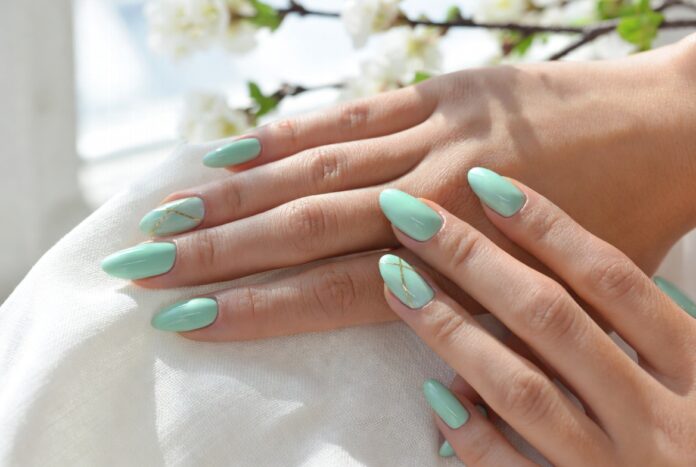
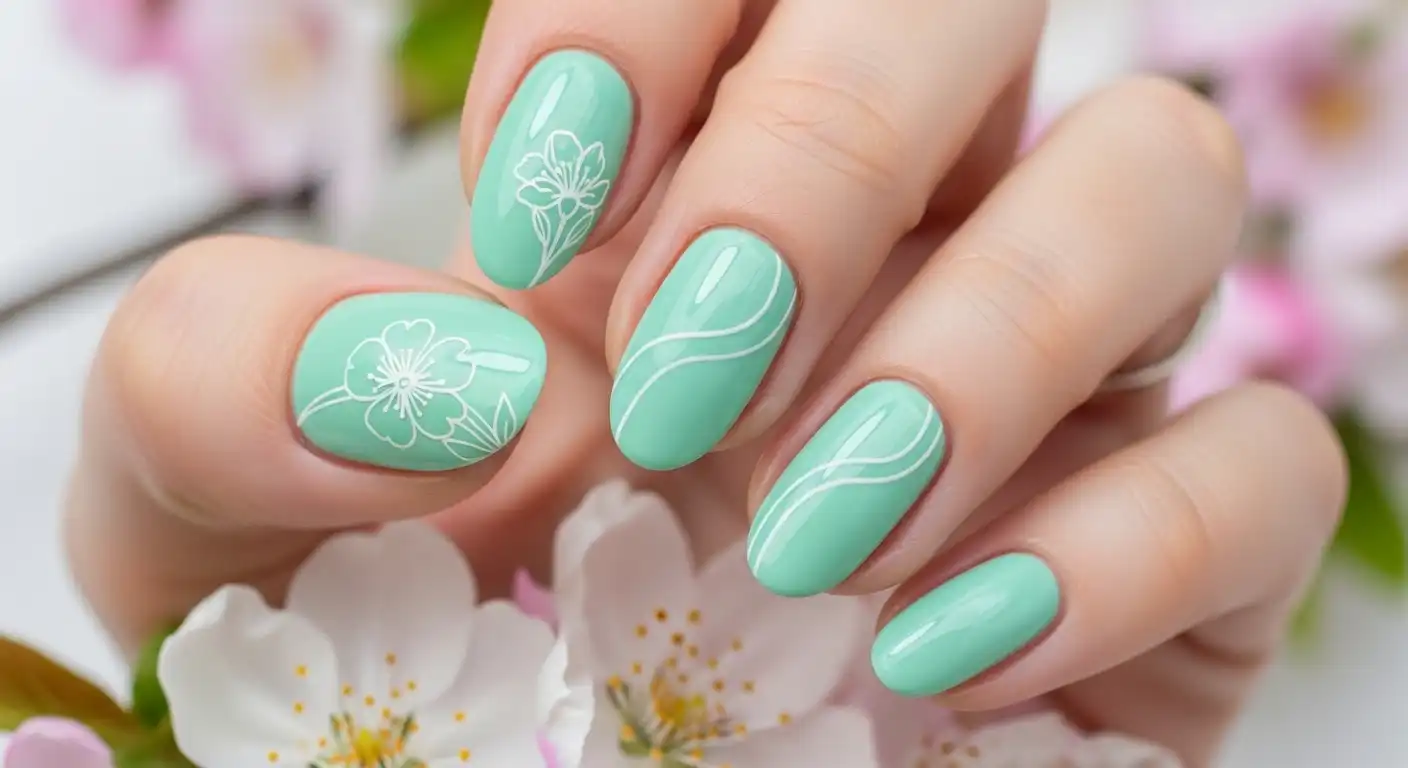
The beauty of mint green lies in how adaptable it proves across different styles. At its most straightforward, a solid coat on short or medium almond nails creates an instantly polished look that requires almost no additional effort. The glossy finish catches light subtly, giving the appearance of healthy, well-cared-for nails without obvious artifice.

Green Matcha Nails: The summer trend that’s taking over

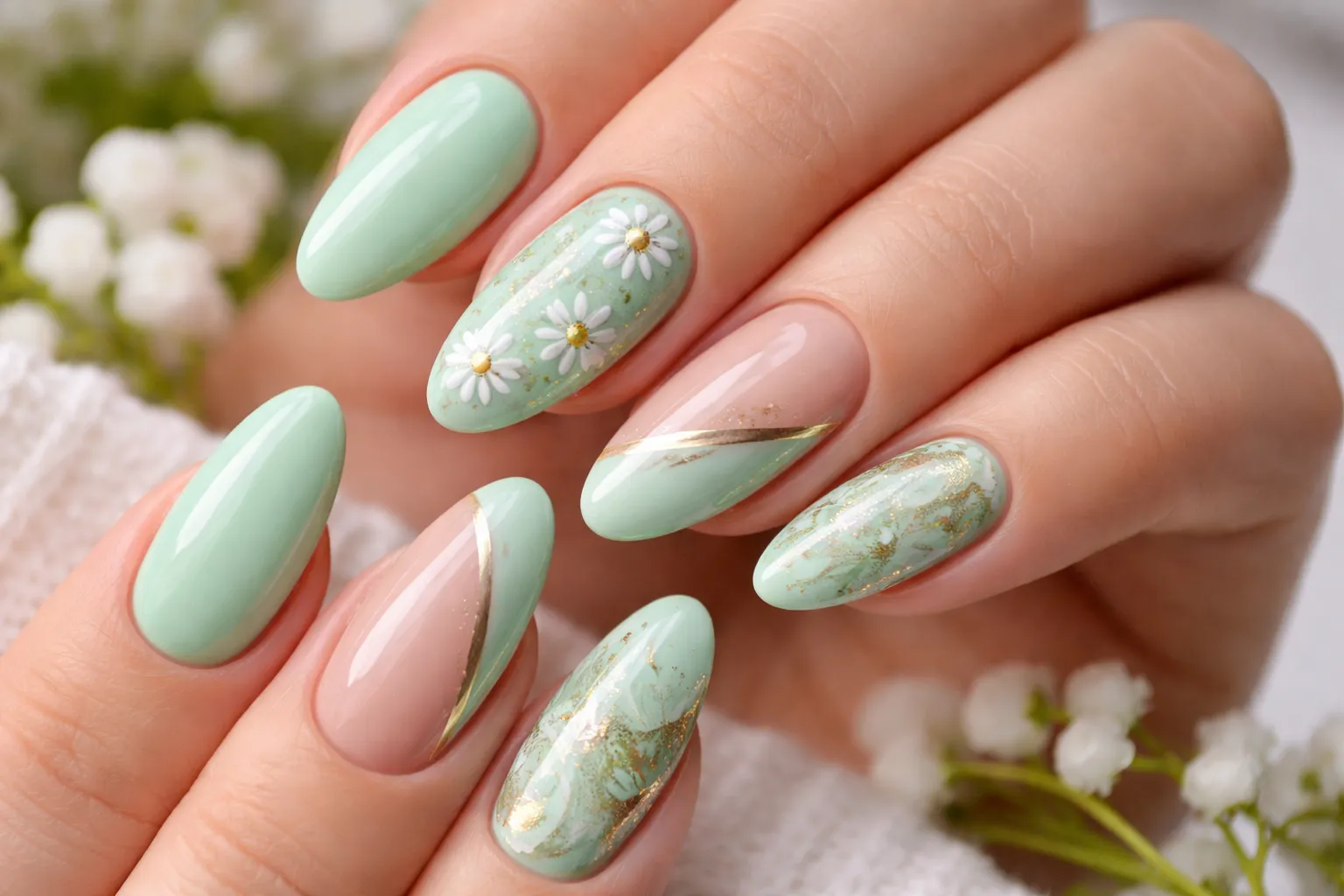
Mint French tip nails have emerged as a particularly elegant variation. Instead of the classic white, the tip appears in a deeper or slightly more saturated mint, creating a soft contrast against a neutral or sheer base. Some artists reverse the formula, using clear or nude bases with mint tips for a modern take on the traditional French manicure.

Marble effects add another layer of interest. Veining in white, pale gold, or even a hint of lavender across the mint base creates movement while maintaining the overall softness. Abstract designs—thin lines, micro-dots, or negative space—keep the focus on the color itself rather than competing with it. These minimalist nail art approaches ensure the manicure feels current rather than costume-like.

Mint Green Nail Designs | Nailz In Bloom

For those seeking a touch more dimension, holographic mint nails introduce subtle shimmer that shifts in different lighting. The iridescence remains gentle, never crossing into glitter territory, preserving the clean aesthetic many seek in spring manicure colors.

Color Pairings and High-Fashion Inspirations

Mint green does not exist in isolation. Its strength lies in thoughtful combinations that enhance rather than distract. Mint and gold nails represent one of the most refined pairings: delicate gold foil, thin metallic lines, or hardware-inspired accents add warmth and luxury without overwhelming the cool base. The contrast feels expensive, almost architectural.

Minty Green Nails: The Unexpected Spring 2026 Color Trend | Nailsami – NAILSAMI

Mint with pink offers a softer, more romantic direction. A single accent nail in blush or a watercolor blend at the base creates depth while keeping the overall palette light. These combinations draw from Y2K influences reinterpreted through a mature lens—playful but never juvenile.

Runway manicures have played a quiet but significant role in elevating the shade. Designers have paired mint green nails with crisp linens, flowing silks, and tailored separates, allowing the color to read as both fresh and timeless. The “clean girl” movement continues to provide context, where mint green fits seamlessly into routines that prioritize effortless elegance and skin-first beauty.

Technique and Application for Lasting Wear

Achieving the perfect mint green manicure begins with preparation. A high-quality base coat prevents staining, particularly important with lighter shades. Gel formulas have become preferred for their durability and high-shine finish that enhances the translucent quality many mint polishes possess.

Application requires a light hand. Multiple thin layers build opacity gradually, avoiding the streaky appearance that can plague pastel shades. For marble or abstract effects, artists often work wet-on-wet, dragging complementary colors with fine tools before sealing everything under a protective top coat.

Holographic or chrome finishes demand precision. The magnetic or reflective particles sit best over a smooth, fully cured base. The result rewards patience: a manicure that maintains its vibrancy for weeks rather than days.

Minty Green Nails: The Unexpected Spring 2026 Color Trend | Nailsami – NAILSAMI

At home, the trend remains accessible. Quality mint green polishes from established brands, combined with careful layering and proper curing (for gel), allow for salon-worthy results without professional tools.

Cultural Context and the Pastel Revival

Mint green nails arrive within a larger conversation about softness and intentionality in beauty. The pastel revival of recent years has moved beyond trend into something more enduring—a rejection of harsh minimalism in favor of gentle, considered choices. Pastel nail colors 2026 reflect this shift, with mint green leading as the shade that feels both nostalgic and forward-looking.

There is something inherently optimistic about the color. It suggests renewal without demanding transformation. In a world still navigating complexity, choosing mint green nails can feel like a small act of clarity—a visual reminder of growth and possibility. The minimalist nail art that often accompanies it reinforces this message: less can indeed be more when executed with confidence.

Wearing Mint Green Beyond the Season

While perfectly suited to spring, mint green possesses a longevity that many seasonal shades lack. As temperatures rise, it transitions effortlessly into summer when paired with white or neutral tones. Come fall, deeper variations or richer accent combinations allow it to evolve without disappearing entirely.

The real staying power, however, lies in its emotional quality. Mint green nails make the wearer feel put-together in a way that feels natural rather than constructed. They complement everything from tailored blazers to soft knits, from office environments to weekend escapes. This adaptability ensures the trend will influence manicure choices well beyond any single season.

15 Mint Green Spring Nails for a Fresh Look Without Bold Colors

In the end, mint green nails succeed because they understand the moment. They offer freshness without novelty, elegance without effort, and color without complication. As spring 2026 unfolds, this quiet shade has proven that sometimes the most impactful trends are the ones that simply feel right from the very first coat.

Miuccia Prada’s “Ugly Chic” Aesthetic Sparks Debate

Miuccia Prada’s “Ugly Chic” Aesthetic Sparks Debate Across Fashion Week


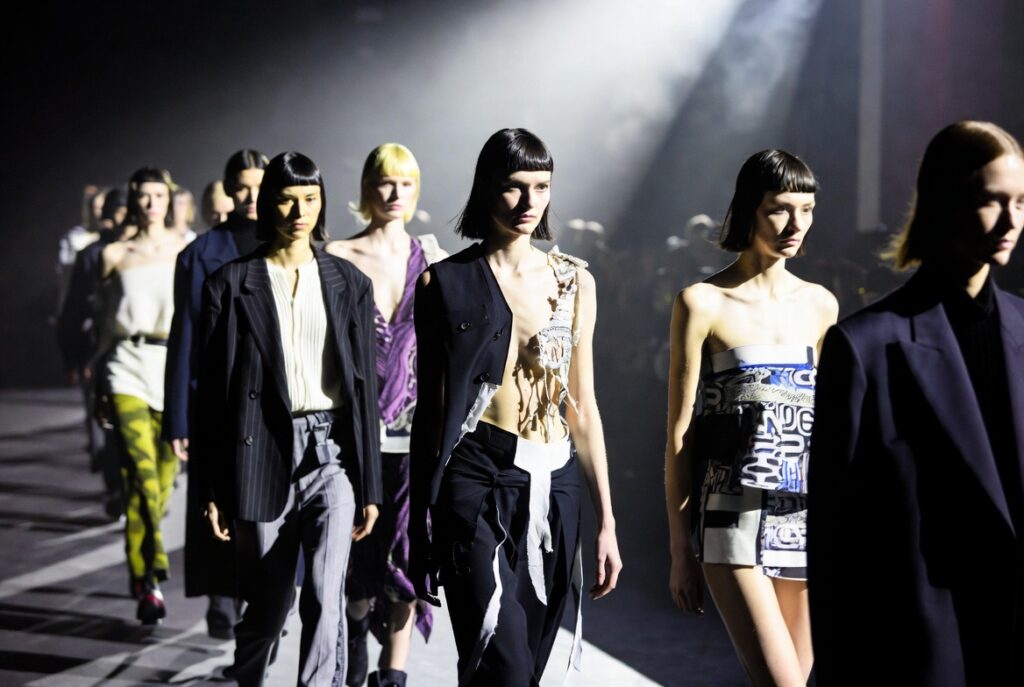
Miuccia Prada has never been afraid to make people uncomfortable. At Prada’s latest runway show, she leaned fully into discomfort once again. The collection revived and sharpened her long-standing “ugly chic” philosophy, sending critics and audiences into immediate debate. Some called it brilliant. Others called it challenging. Almost everyone called it unmistakably Prada.

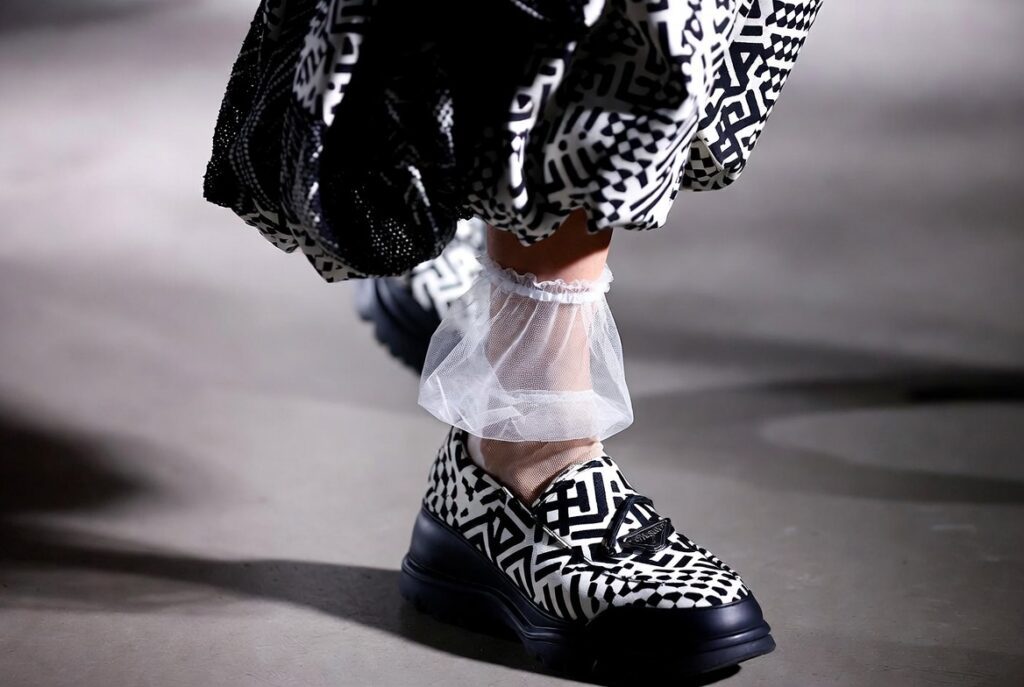
Miuccia Prada ugly chic has returned with renewed force in 2026. The runway featured deliberately awkward silhouettes, clashing patterns, and styling that rejected conventional beauty. Thick socks with elegant sandals. Bulky coats over delicate dresses. Prints that fought rather than harmonized. The show felt less like a presentation of clothes and more like a deliberate provocation.

This is not new territory for Miuccia Prada. She has always treated fashion as intellectual exercise rather than simple decoration. Yet this season’s version feels sharper, more confident, and more willing to divide opinion. In an industry that often chases easy approval, her willingness to embrace the unattractive reads as radical.

The reaction has been swift and loud. Social media filled with both celebration and confusion. Fashion insiders debated the merits late into the night. For Runway Magazine, the conversation matters. When one of fashion’s most respected minds chooses to challenge beauty standards so directly, the entire industry is forced to examine its own values.

Miuccia Prada’s “Ugly Chic” Aesthetic Sparks Debate Across Fashion WeekThe Return of Miuccia Prada Ugly Chic

Miuccia Prada ugly chic first gained traction decades ago when she paired practical nylon with luxury finishes. She has revisited the idea periodically, but never quite like this. The 2026 collection pushes the concept further than ever before.

Models walked in garments that seemed to reject conventional attractiveness at every turn. Shoulders were exaggerated. Proportions felt intentionally off. Colors clashed with deliberate aggression. Even the makeup and hair styling embraced imperfection — smudged eyes, undone textures, and awkward accessories.

However, the “ugly” elements were executed with such precision that they became compelling. This is the quiet genius of Miuccia Prada ugly chic. What appears sloppy or unattractive at first glance reveals deep thought and technical mastery upon closer inspection.

Challenging Beauty Standards Through Design

Miuccia Prada has always questioned what fashion is supposed to do. This season she asks a sharper question: why must clothes make the wearer look conventionally beautiful?

The collection answers by embracing the opposite. Unconventional fashion style takes center stage through clashing prints, bulky layering, and anti-glamour details. A delicate silk dress appears under a heavy, ill-fitting coat. Elegant tailoring is ruined — deliberately — by mismatched buttons and uneven hems.

These choices are not random. They form a coherent argument against the polished perfection that dominates much of contemporary luxury. In turn, the clothes celebrate character over conformity. They reward the wearer who values ideas over easy compliments.

Critics remain divided. Some praise the intellectual bravery. Others argue that fashion should still aim to flatter. The debate itself proves the collection’s power. Few designers can still provoke such strong reactions in 2026.


Miuccia Prada’s “Ugly Chic” Aesthetic Sparks Debate Across Fashion WeekIntellectual Fashion vs Commercial Appeal

Prada has long balanced commercial success with conceptual depth. This collection tests that balance more aggressively than recent seasons.

The pieces are not designed for mass appeal. They demand engagement. They ask the viewer to think rather than simply desire. Yet commercial interest remains strong. Certain key looks have already appeared on influential figures and generated significant social buzz.

This tension defines much of Miuccia Prada’s career. She creates clothes that function both as wearable ideas and as desirable objects. The “ugly chic” approach amplifies that duality. The more challenging the garment, the more it seems to intrigue certain customers who seek distinction over decoration.

Global Reaction and Social Media Impact

The show sparked immediate conversation across platforms. Hashtags related to the collection trended within hours. Fashion students analyzed the references. Seasoned editors debated its relevance. Younger audiences shared styling interpretations that ranged from loving homage to playful mockery.

This level of engagement shows how Prada continues to influence directional fashion globally. Even those who dislike the aesthetic cannot ignore it. The collection has become a reference point for discussions about beauty, taste, and the role of discomfort in fashion.

Social media has amplified the debate in ways that traditional runway shows once could not. Close-up videos of clashing details and awkward proportions spread rapidly. As a result, the conversation reached far beyond traditional fashion circles.


What This Means for Fashion’s Future Direction

Miuccia Prada ugly chic arrives at a moment when fashion feels increasingly polished and safe. Her willingness to embrace imperfection offers a necessary counterpoint. It reminds the industry that true creativity often lives in the uncomfortable space between beauty and its opposite.

Whether this direction influences broader trends remains to be seen. However, Prada’s consistent ability to shape conversation suggests the impact will be felt. Other designers may begin experimenting with deliberate imperfection. Consumers may grow more comfortable with clothes that challenge rather than flatter.

Runway Magazine has long argued that great fashion should provoke thought as much as desire. This collection delivers on both fronts. It may not be easy to wear, but it is impossible to dismiss.

In the end, Miuccia Prada reminds us that fashion’s most valuable role is not to confirm what we already find beautiful. Its power lies in showing us new ways to see. In 2026, few designers are doing that more effectively than she is.


‘Top Gun 3’ Officially in Development as Tom Cruise Returns

‘Top Gun 3’ Officially in Development as Tom Cruise Returns

‘Top Gun 3’ Officially in Development as Tom Cruise Returns to the Franchise

Tom Cruise is coming back. Paramount Pictures has officially greenlit Top Gun 3, with the star reuniting with producer Jerry Bruckheimer. A script is already in development. The news dropped during Paramount’s major campaign celebrating its film legacy.

Top Gun: Maverick changed the game in 2022. The sequel earned more than $1.4 billion worldwide and became one of the decade’s biggest hits. It proved that theatrical event films still hold massive power. Now the franchise aims to do it again.

Bruckheimer, who helped shape the original 1986 classic, returns as producer. Cruise’s exact role remains unclear. He may star, produce, or handle both duties as he did on Maverick. Either way, his involvement guarantees attention.

The first sequel succeeded because it felt authentic. Cruise insisted on real flight sequences. He trained pilots and flew in actual jets. That commitment delivered visceral thrills audiences hadn’t experienced in years. Top Gun 3 will likely follow the same demanding approach.

A Strategic Move for Paramount

For Paramount, this project serves as a clear statement. The studio wants to protect the big-screen experience in a crowded marketplace. Top Gun 3 offers a rare chance to draw multigenerational crowds back to theaters. It also strengthens the studio’s portfolio of proven blockbuster franchises.

Cruise continues to fuel excitement. His recent viral stunts and public appearances keep him in the spotlight. At sixty-plus years old, he still performs many of his own high-risk sequences. That dedication sets him apart from most modern action stars.

Early details stay scarce. No release date exists yet. Industry analysts expect a 2027 or 2028 window to allow enough time for complex aerial filming. The story will likely continue Maverick’s journey while introducing new pilots.

Why This Matters Now

Top Gun 3 arrives at a pivotal time for cinema. Many franchises struggle to recapture magic. This one carries strong momentum from Maverick. Fans already search for updates on the sequel daily. The combination of Cruise, Bruckheimer, and high-stakes aviation creates powerful anticipation.

Runway Magazine has long tracked how stars and studios shape cultural moments. Tom Cruise remains one of the last actors who can open a film through sheer star power. His return to the cockpit signals confidence in theatrical storytelling.

Development has only just begun, but the runway is clear. Top Gun 3 promises speed, spectacle, and the kind of cinematic adrenaline that defined the franchise from the start. The sky, once again, belongs to Maverick.

Alessandro Michele Valentino Era Is Redefining Couture

Alessandro Michele’s Valentino Era Is Redefining Couture

Alessandro Michele’s Valentino Era Is Redefining Couture Maximalism in 2026

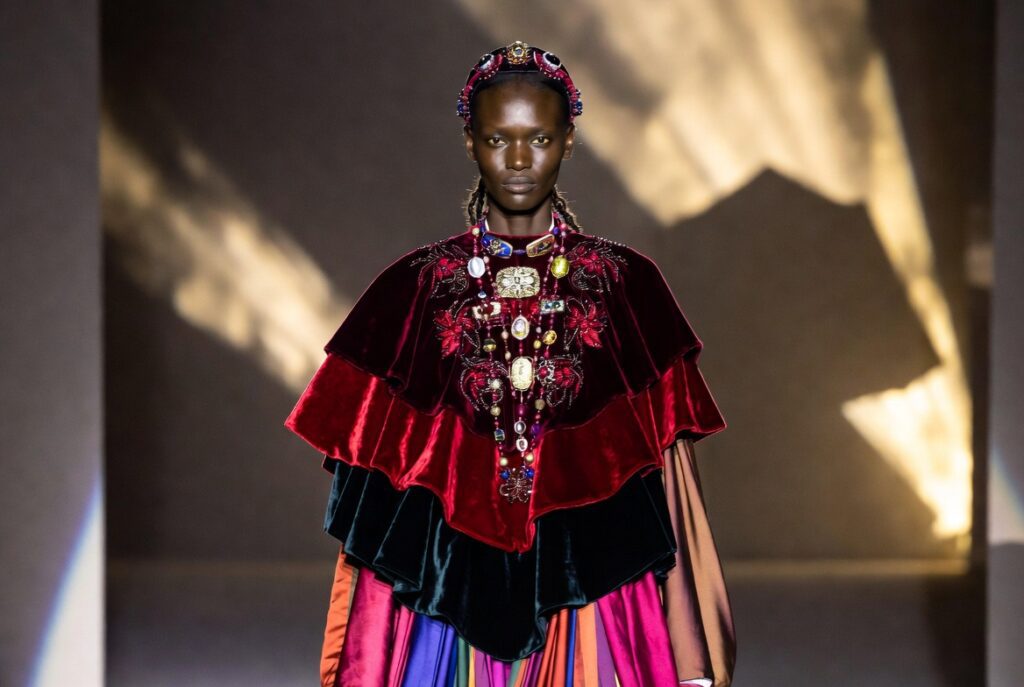
Alessandro Michele Valentino has stepped into Valentino with characteristic drama. In a single season, he has already begun to reshape one of fashion’s most iconic houses. Alessandro Michele Valentino brings his signature romantic maximalism to every silhouette and detail. Critics and insiders agree that Alessandro Michele Valentino is not merely designing clothes — he is rewriting the language of modern couture. Yet the most striking part is how quickly his vision has taken hold. Alessandro Michele Valentino is redefining couture maximalism in 2026.

For years, Valentino had leaned toward sleek minimalism. Michele changed that direction almost overnight. His collections overflow with layers, textures, historical references, and unapologetic ornament. The shift feels both radical and perfectly timed. After seasons dominated by quiet luxury and neutral palettes, many in fashion were craving something more expressive. Michele delivered exactly that — and the industry has responded with excitement.

Alessandro Michele’s Valentino Era Is Redefining Couture Maximalism in 2026
From Minimalism to Maximalist Storytelling

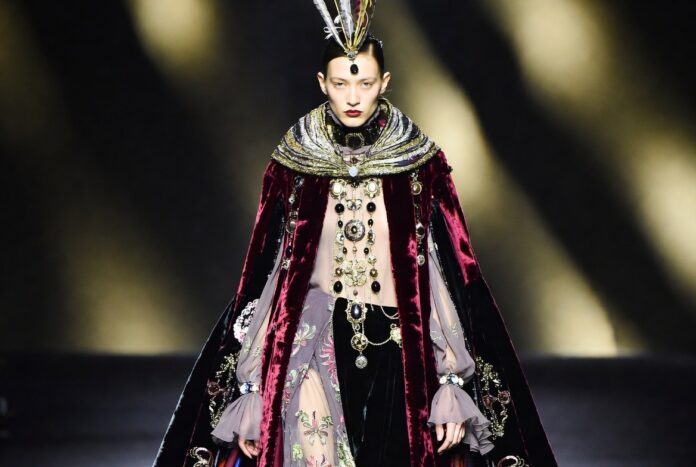
However, the change goes deeper than surface decoration. Alessandro Michele Valentino treats each garment as a chapter in a larger narrative. One look might combine Renaissance embroidery with Victorian ruffles and modern punk attitude. Colors clash deliberately. Textures overlap in rich, unexpected ways.

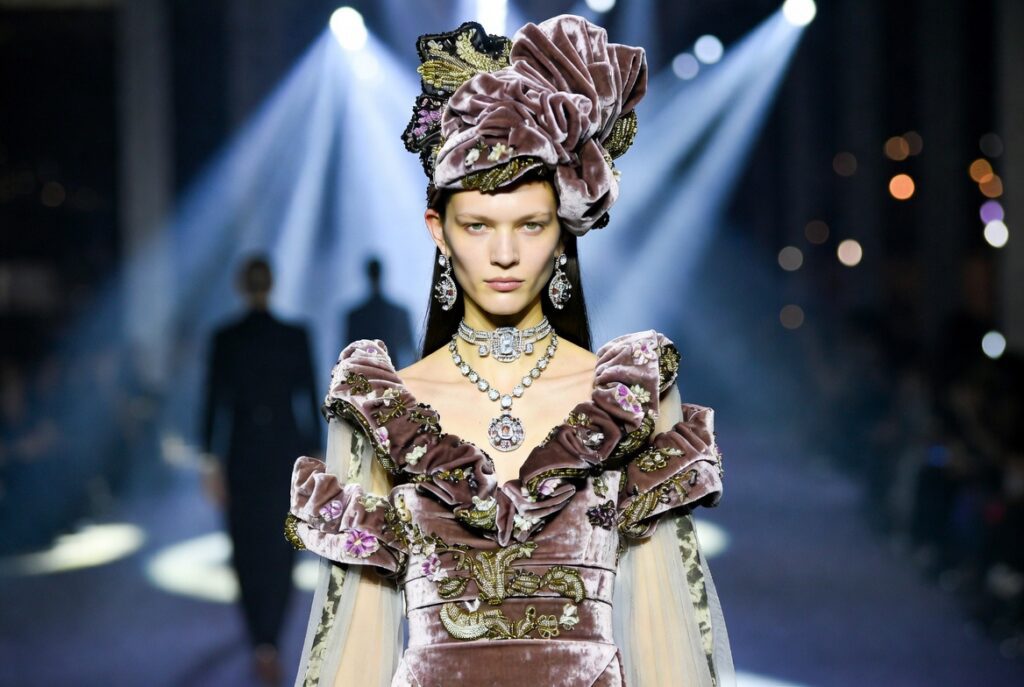
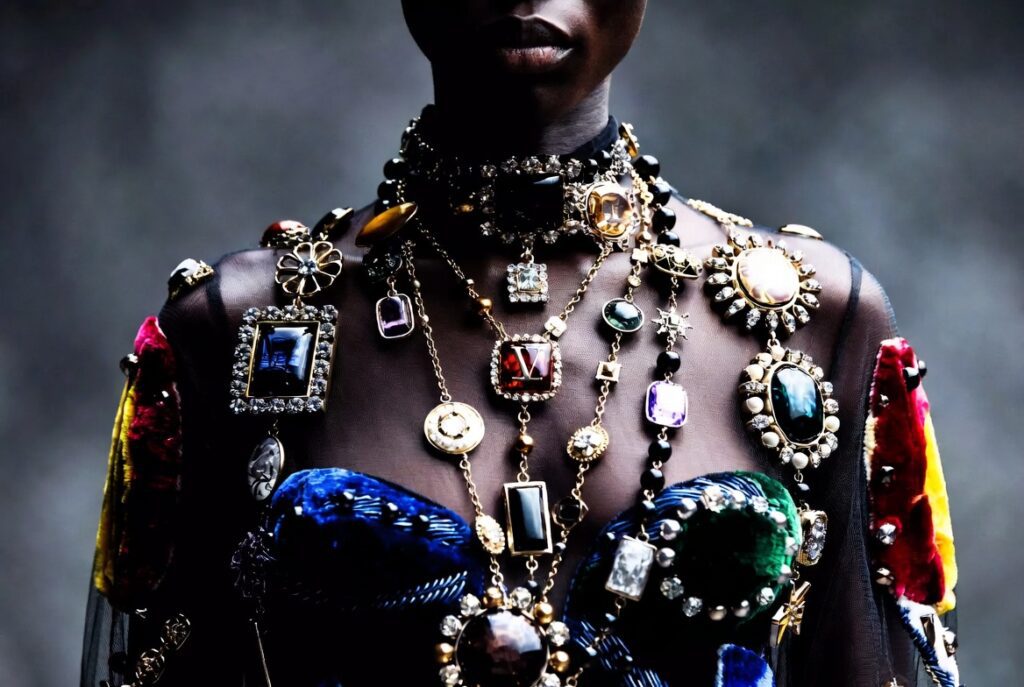
Still, nothing feels random. Every element serves the story. Models walk the runway with theatrical confidence. Headpieces add height and drama. Cascading necklaces catch the light with every step. As a result, the clothes invite closer inspection. They reward the eye that lingers.

Meanwhile, this maximalist fashion trend offers a refreshing contrast to recent seasons. Many designers had embraced restraint. Michele chooses abundance instead. He layers velvet over lace, mixes bold prints with intricate beading, and celebrates ornament as a form of self-expression. The approach feels joyful and deeply personal.

Alessandro Michele’s Valentino Era Is Redefining Couture Maximalism in 2026
How Alessandro Michele Valentino Is Reshaping Valentino’s Identity

Michele honors Valentino’s Roman heritage while pushing it forward. He draws from the house archives but never copies them directly. Instead, he reinterprets classic codes through his own romantic lens. Ready-to-wear pieces carry the same narrative weight as couture. Accessories — from sculptural bags to ornate jewelry — complete the maximalist vision.

For instance, a single blouse might feature hand-embroidered florals paired with dramatic ruffled sleeves. A cape could combine rich velvet with unexpected color blocking. These details turn clothing into wearable storytelling.

Critics have praised the emotional depth. Wearers say the garments make them feel more themselves. They move differently. They stand taller. In turn, the new Valentino aesthetic encourages creativity rather than conformity.

Alessandro Michele’s Valentino Era Is Redefining Couture Maximalism in 2026
Celebrity Endorsements and Cultural Momentum

Celebrity fashion Valentino has played a major role in accelerating visibility. Stars have embraced the bold layering and eclectic styling on red carpets and in editorials. Each appearance generates fresh conversation and drives search interest across platforms.

Meanwhile, social media amplifies every detail. Close-up videos of beading and texture spread rapidly. Stylists mix archival Valentino pieces with the new collections. As a result, the influence reaches far beyond the runway and into everyday fashion conversations.

This momentum reflects a genuine cultural shift. After years of muted tones, many now seek clothing that sparks joy and personality. Michele’s work meets that desire directly.

The Broader Industry Shift Toward Bold Couture

The timing feels significant. Fashion industry trends 2026 show a clear swing away from stealth wealth. Bold fashion trends are reclaiming space. Theatricality and self-expression are back in focus.

Other luxury houses have begun testing similar territory. Maximalist elements now appear across multiple collections. However, few execute the approach with Michele’s coherence and emotional resonance.

Runway Magazine has long celebrated designers who dare to push boundaries. Alessandro Michele Valentino proves that couture can still surprise, delight, and provoke thought. In a world filled with sameness, his unapologetic maximalism feels necessary and refreshing.


What This Means for Fashion in 2026 and Beyond

Michele’s influence at Valentino will continue to unfold. Future collections will reveal how deeply he embeds his vision into the house DNA. Early signs point to strong staying power. The positive response from press, buyers, and customers suggests this direction has real longevity.

As a result, the industry may see more houses embrace expressive couture. After seasons of restraint, boldness feels newly relevant. Consumers increasingly seek pieces that spark conversation and allow personal storytelling.

Runway Magazine will track every step of this evolution. We believe great fashion should move people. Alessandro Michele Valentino reminds us why couture remains powerful. His work revives the pure joy of dressing up in a fast-changing world.

The era of quiet may be ending. At Valentino, the volume has risen with confidence and creativity. In 2026, fashion has rarely felt more expressive or more alive.


Pharrell Williams Blends Streetwear and Luxury for Louis Vuitton

Pharrell Williams Blends Streetwear and Luxury for Louis Vuitton

Pharrell Williams Blends Streetwear and Luxury in Louis Vuitton’s Latest Collection

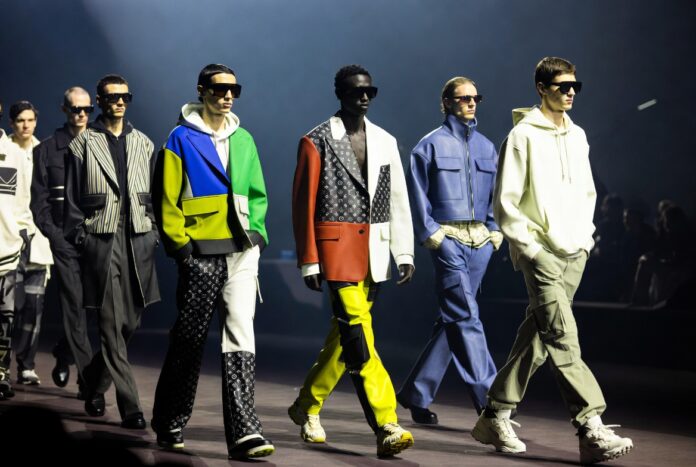
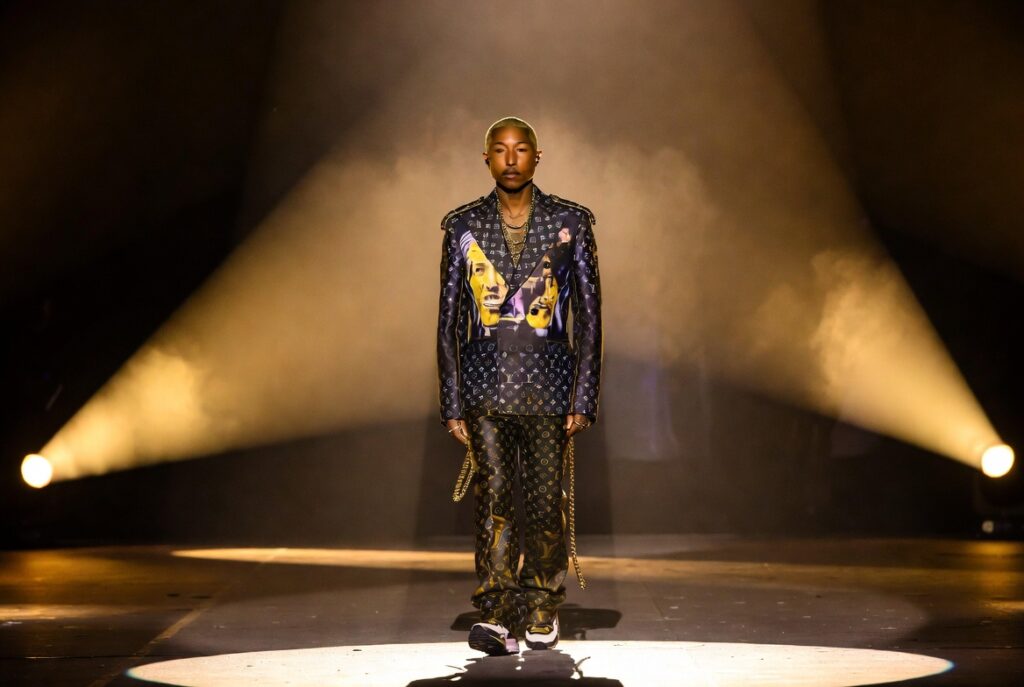
Pharrell Williams has never been content to stay in one lane. Since stepping into the role of menswear creative director at Louis Vuitton, he has steadily dismantled old boundaries between street culture and high fashion. His latest collection for the house continues that mission with even greater confidence. Pharrell Louis Vuitton has become shorthand for a new kind of luxury — one that feels lived-in, rhythmic, and unmistakably of the moment.

The Spring/Summer 2026 menswear presentation in Paris made the fusion impossible to ignore. Models moved down the runway in pieces that mixed impeccable tailoring with unmistakable streetwear DNA. Oversized silhouettes sat alongside precise cuts. Graphic prints collided with subtle LV monogram details. Bold color palettes brought energy while maintaining the quiet authority expected from one of fashion’s oldest houses.

This is not novelty for novelty’s sake. Pharrell’s approach reflects a deeper understanding of how men actually want to dress today. Younger audiences especially respond to clothing that can move from the street to the front row without losing its edge. In that sense, the collection feels less like a trend and more like an accurate reflection of contemporary masculinity.

The Evolution of Pharrell’s Vision at Louis Vuitton

When Pharrell first took the helm at Louis Vuitton, many wondered whether his streetwear roots could translate to the historic house. He answered those doubts quickly. Each season has shown growing assurance. The latest collection builds on that foundation with greater sophistication.

Pharrell Louis Vuitton now represents a seamless dialogue between two worlds that once seemed separate. Tailored blazers appear with dropped shoulders and relaxed proportions. Classic LV canvas gets reimagined through graphic prints and unexpected material combinations. Even the most luxurious pieces carry an effortless cool that feels contemporary rather than costume-like.

Yet the real achievement lies in balance. The collection never sacrifices Louis Vuitton’s heritage of craftsmanship. Instead, it expands the definition of what that craftsmanship can look like in 2026.


Pharrell Williams Blends Streetwear and Luxury for Louis VuittonStreetwear Luxury Done Right

The phrase “streetwear luxury trend” has been used so often it risks losing meaning. Pharrell Louis Vuitton gives it fresh life. His designs prove that street influence and high-end execution can coexist without compromise.

Oversized cargo pants are cut from fine wool and finished with precise tailoring details. Hoodies appear in cashmere with subtle monogram embroidery. Sneakers remain true to their athletic roots while incorporating luxury materials and hand-finished touches.

This fusion feels natural because it comes from someone who has lived in both worlds for decades. Pharrell understands how culture moves. He also understands how luxury houses can evolve without losing their soul. The result is clothing that feels relevant to a new generation while still respecting Louis Vuitton’s legacy.

Cultural References and Hip-Hop Influence

Hip hop fashion influence runs deep throughout the collection. Graphic prints nod to album artwork and street art. Silhouettes echo the relaxed confidence of early 2000s rap videos while updating them for today. Even the styling — layered chains, statement accessories, and bold color blocking — carries clear cultural DNA.

However, Pharrell never reduces the work to simple homage. He elevates these references through exceptional craftsmanship and thoughtful design. A graphic sweatshirt might feature hand-appliquéd details that take hours to complete. Tailored pieces incorporate subtle nods to skate and street culture without ever feeling forced.

This thoughtful integration explains why the collection resonates so strongly. It honors cultural sources while creating something entirely new.


Celebrity Impact and Global Reach

Celebrity appearances have amplified the collection’s reach. Musicians, athletes, and actors have been spotted wearing key pieces both on and off the runway. Each moment fuels viral conversations and drives global engagement, especially among younger audiences.

Pharrell’s own influence as a cultural figure adds another layer. His ability to bridge music, fashion, and art gives the collection authenticity that purely commercial efforts often lack. When he presents a look, it feels like a natural extension of his broader creative universe.

This celebrity designer fashion momentum has helped Louis Vuitton connect with new demographics while maintaining its prestige. The brand’s menswear now speaks to a wider, more diverse audience without diluting its luxury positioning.

What This Means for Menswear in 2026

Pharrell’s work at Louis Vuitton signals a larger shift in modern menswear trends. The old divide between streetwear and luxury continues to dissolve. In its place emerges a more fluid approach where men can move comfortably between contexts without changing their entire wardrobe.

Younger consumers in particular drive this change. They want clothing that reflects their cultural references and lived experiences. Pharrell Louis Vuitton delivers exactly that — pieces that feel both aspirational and wearable.

Looking ahead, this fusion seems likely to define the next chapter of menswear. Other houses are already watching closely. The question is no longer whether streetwear and luxury can coexist, but how creatively they can continue to evolve together.

Pharrell Williams has proven once again that he operates best at these cultural intersections. His latest collection for Louis Vuitton doesn’t just blend worlds — it creates something entirely new from their meeting point. In 2026, that feels less like innovation and more like inevitability.